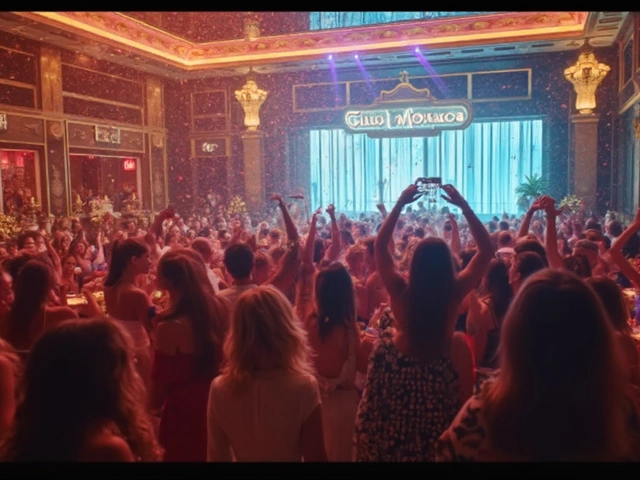
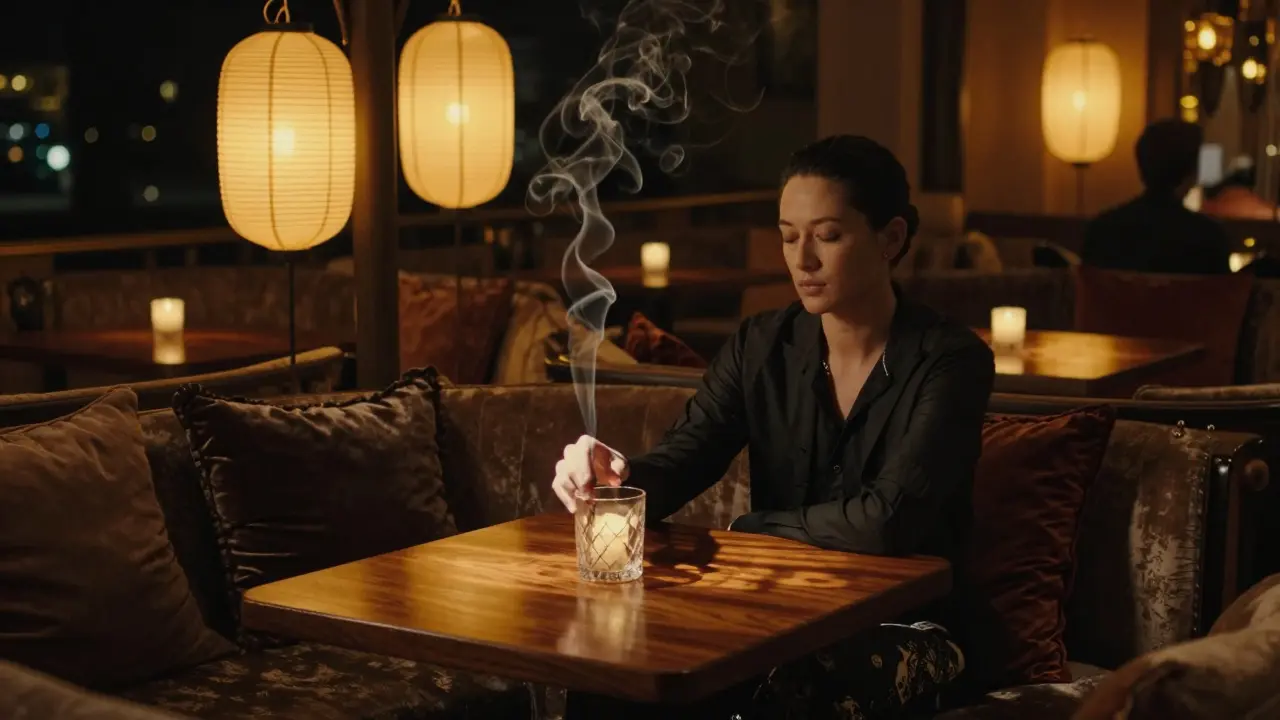
When you walk into Buddha Bar in Monaco, the air changes. It’s not just the incense or the low-lit lanterns. It’s the sound - a slow, hypnotic pulse that pulls you in without asking. This isn’t a club. It’s not even really a bar. It’s a mood. And at the heart of that mood? The Buddha Bar Dance.
What Is the Buddha Bar Dance?
The Buddha Bar Dance isn’t a choreographed routine you learn at a studio. It’s not even something you consciously decide to do. It’s what happens when the music takes over. Your shoulders loosen. Your head nods just slightly. Your feet tap, not to the beat, but to the rhythm between the beats. It’s a dance of stillness. Of surrender. It started in the late 1990s when Claude Challe, the founder of Buddha Bar, began blending Indian sitars, Thai gongs, and Middle Eastern flutes with deep house basslines and ambient piano. He wasn’t trying to make dance music. He was trying to make space - a sonic sanctuary where people could unwind without checking their phones or waiting for the next bottle service. But something unexpected happened. People started moving. The Buddha Bar Dance is slow. It’s not about spinning or jumping. It’s about letting the music flow through you. You might sway side to side, fingers brushing the edge of your glass. You might close your eyes and just breathe. That’s the dance. And if you’ve ever been there, you know it’s the only one that feels right.How the Music Builds the Vibe
The soundtrack isn’t random. Every track on a Buddha Bar compilation is chosen like a brushstroke on a painting. You’ll hear a Taiko drum from Japan, then a Tibetan singing bowl, then a whispered Arabic vocal layered over a deep 4/4 kick. It’s not meant to be understood - it’s meant to be felt. The first official Buddha Bar album, released in 1999, sold over 2 million copies worldwide. It wasn’t chart-topping pop. It didn’t have lyrics you could scream along to. But it had something rarer: consistency. The same mix that played in Paris in 2001 still plays in Monaco today. That’s because the formula hasn’t changed - and it doesn’t need to. The signature sound? A blend of:- Traditional Asian instrumentation (sitar, guzheng, duduk)
- Modern downtempo beats (80-110 BPM, never faster)
- Layered ambient textures (ocean waves, wind chimes, distant temple bells)
- Minimalist vocals (often in Sanskrit, Thai, or Arabic, never in English)
Why It Still Works in 2025
In a world where clubs blast EDM at 130 BPM and TikTok trends last 72 hours, Buddha Bar’s staying power feels almost rebellious. But here’s the truth: people are tired. Tired of noise. Tired of being sold to. Tired of having to perform even when they’re out. Buddha Bar doesn’t ask you to be anyone. You don’t need to dress a certain way. You don’t need to know the DJ. You don’t even need to talk. You just need to show up. In Monaco, where luxury often means visibility - where being seen is part of the price - Buddha Bar offers the opposite: invisibility with elegance. It’s the only place where a billionaire in a tailored suit can sit alone, eyes closed, swaying gently, and no one thinks twice. That’s rare. The playlist has evolved - now including subtle electronic elements from artists like Tycho and Bonobo - but the core remains untouched. The 2025 version of the Buddha Bar Dance is the same as the 2003 version: slow, deep, and utterly private.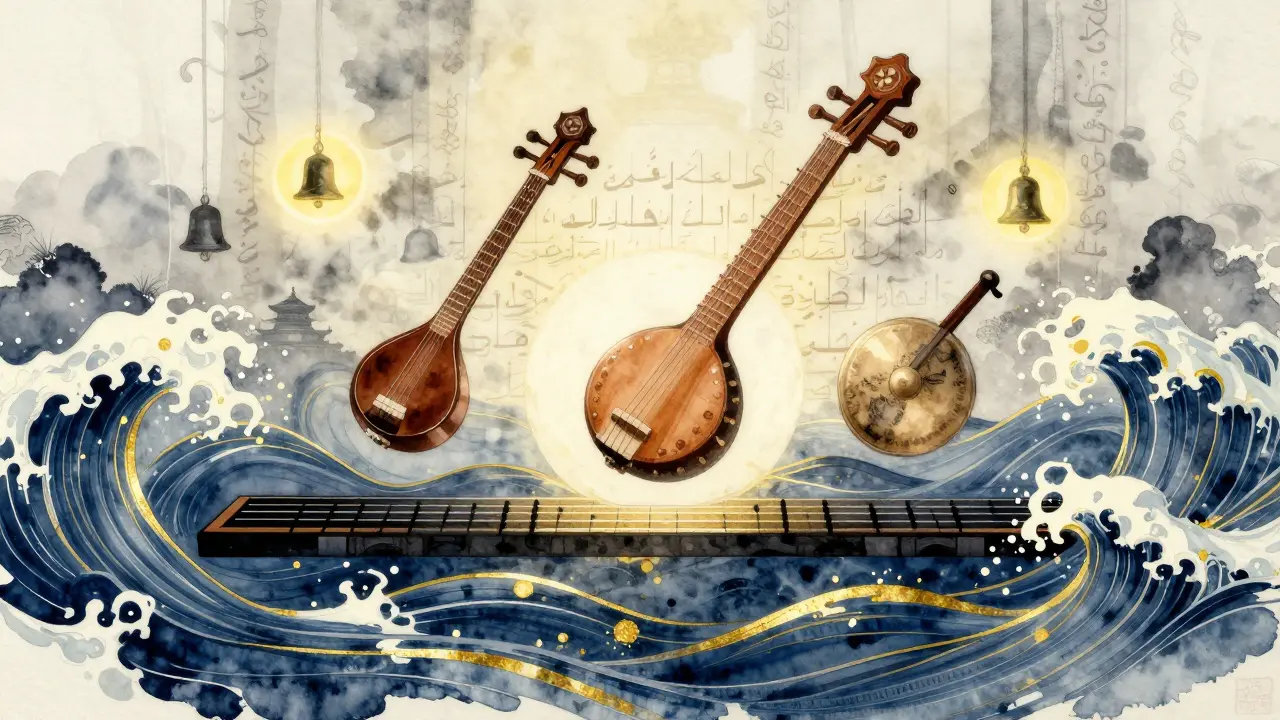
What to Expect When You Go
If you’ve never been, here’s what actually happens:- You book a table. Walk-ins are rare after 9 PM.
- You’re greeted with a warm towel and a glass of jasmine tea - no menu, no pressure.
- The lights dim. The music starts - not loud, but everywhere.
- Within ten minutes, you stop checking your watch.
- At some point, you realize you’ve been sitting there for two hours without saying a word.
The Dance Isn’t Just in Monaco
Buddha Bar has locations in Tokyo, Dubai, and Moscow. But only Monaco keeps the original spirit. Why? Because Monaco doesn’t need to chase trends. It already has the most exclusive audience in the world. The regulars? Retired opera singers, former diplomats, fashion designers who’ve seen everything. They come because the music hasn’t changed. Because the staff remembers their names. Because the dance hasn’t been sold out. In Tokyo, they added karaoke booths. In Dubai, they play Bollywood remixes. In Monaco? Nothing changes. The same playlist. The same lamps. The same slow sway. That’s why people fly in just to sit there for one night. Not for the view. Not for the name. For the silence between the beats.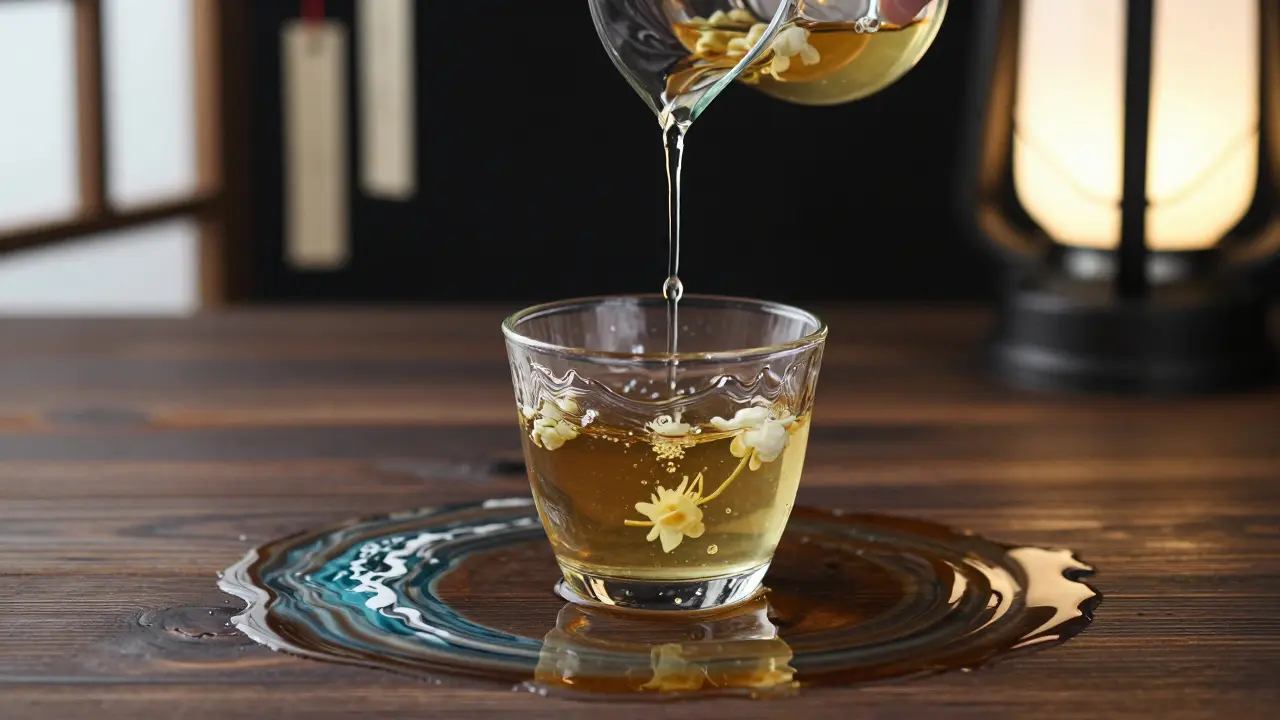
How to Recreate the Buddha Bar Dance at Home
You don’t need a private jet to feel it. Here’s how to bring the vibe home:- Play the original Buddha Bar XX compilation (2024 release) on a high-fidelity speaker - not Bluetooth.
- Light sandalwood or frankincense incense. No candles with fake scents.
- Dim the lights. Use paper lanterns or salt lamps.
- Put your phone in another room. No notifications. No music apps.
- Put on loose clothing. Sit on the floor. Close your eyes.
- Let your body move - or don’t. Either way is right.
Why It’s Not Just Music - It’s Therapy
Studies on ambient music and stress reduction show that slow, rhythmic, non-verbal soundscapes lower cortisol levels by up to 30%. Buddha Bar’s music was never designed as therapy. But it works like it. People come in after breakups. After business failures. After losing someone. They don’t say anything. They just sit. And after an hour, they leave calmer. Not fixed. But lighter. That’s the magic. It doesn’t fix anything. It just gives you room to breathe. In a world that demands constant output, Buddha Bar offers nothing but presence. And sometimes, that’s all we need.Is Buddha Bar in Monaco still open?
Yes. Buddha Bar Monaco is open year-round, though hours vary by season. It’s typically open from 8 PM to 2 AM, with reservations strongly recommended. The venue operates every night except during private events, which are rare.
Do you need to dress up to go to Buddha Bar?
There’s no strict dress code, but most guests wear elegant casual attire - think tailored trousers, silk shirts, or simple dresses. Flip-flops, sportswear, and beachwear are not permitted. The vibe is refined, not formal. You want to look like you belong, not like you’re trying too hard.
Can you dance at Buddha Bar?
You can move - but not in the way you’d expect. There’s no dance floor. No one is dancing in the traditional sense. People sway, nod, or sit still. That’s the point. The music invites movement, not performance. If you try to break into a full dance, you’ll feel out of place. The dance is internal.
What’s the best time to go to Buddha Bar?
Arrive between 9:30 PM and 10:30 PM. The music builds slowly, and the atmosphere peaks around midnight. Earlier, it’s too quiet. Later, it’s harder to get a table. Weeknights are quieter and more intimate. Weekends are livelier but still calm compared to other Monaco venues.
Is Buddha Bar worth the price?
If you’re looking for cheap drinks or loud music, no. But if you want an experience that stays with you - the kind you remember years later - then yes. A single cocktail costs €20, but you’re paying for silence, atmosphere, and time. It’s not a bar. It’s a moment.