The Monaco Grand Prix isn’t just another race on the F1 calendar. It’s the one where precision beats power, where a single mistake ends your day, and where the world’s fastest cars crawl through streets tighter than a garage at a vintage car show. In 2025, the Circuit de Monaco still runs through the same narrow alleys, past the same luxury yachts, and under the same glittering lights that have made it legendary since 1929. No other track demands this kind of focus. No other race feels this personal.
What Makes the Circuit de Monaco So Unique?
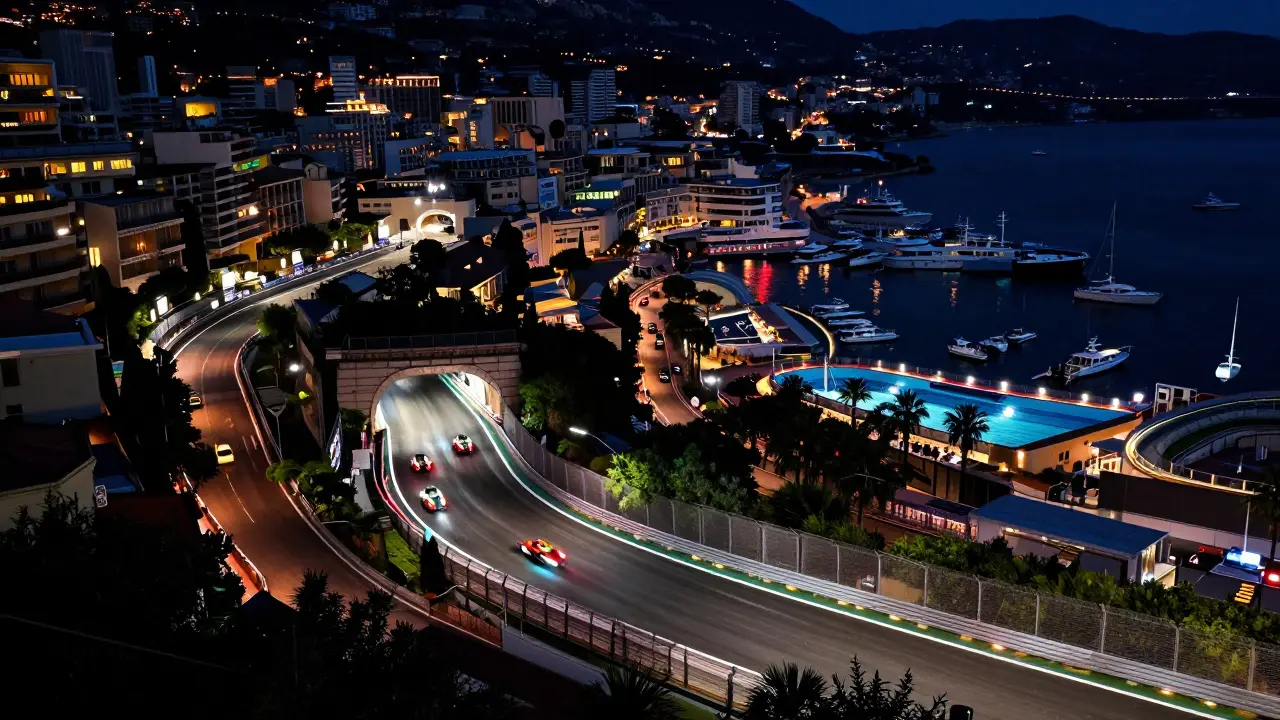
The Circuit de Monaco is 3.337 kilometers long, but it feels longer because every meter matters. Unlike purpose-built tracks with wide run-offs and smooth asphalt, this one is paved with real city streets. There’s no room for error. The walls are closer than your mirror. The barriers aren’t there for show-they’re there because cars have hit them. In 2024, 12 out of 20 cars retired due to contact with the barriers. That’s 60% of the field, and most of those crashes happened in corners you’ve never heard of: Sainte-Dévote, Tabac, and the Swimming Pool.
The track has only 19 turns, but they’re all different. Some are slow hairpins you have to brake for at 120 km/h. Others are high-speed kinks where you’re trusting your tires to hold on at 250 km/h. There’s no long straight to catch your breath. The longest straight-on the harbor front-is just 540 meters. You’re either braking, turning, or accelerating. There’s no coasting.
And then there’s the grip. The asphalt isn’t designed for racing. It’s designed for pedestrians, taxis, and delivery vans. Rubber builds up over the weekend, but the first laps are like driving on wet glass. Teams spend hours analyzing tire temperatures and pressure. Even a 0.2 bar drop can cost you half a second per lap.
Why Do Teams Treat Monaco Like a Different Sport?
Most F1 teams run high-downforce setups at Monaco. That means big wings, stiff suspension, and minimal drag. It’s the opposite of what they use at Monza, where speed matters more than grip. At Monaco, you sacrifice top speed to stick to the road. A car that’s fast on straights will get eaten alive in the corners here.
In 2025, teams are using the highest rear wing angle of the season-up to 15 degrees more than at Silverstone. The result? Top speeds drop to around 280 km/h, but cornering speeds stay above 180 km/h. That’s why qualifying is everything. If you’re not on pole, you’re probably not winning. The last time a driver won from outside the top three was in 1996. That’s almost 30 years of pole position dominance.
Strategy? Forget it. Pit stops are risky. The tunnel’s darkness makes it hard to judge distance. One misjudged gear shift, and you’re in the barriers. Most teams run one or two stops at most. Fuel strategy is almost irrelevant-there’s no way to save enough to skip a stop. Tire degradation is brutal, but changing tires too early means losing position in traffic. It’s a game of patience, not aggression.

The Drivers Who Master Monaco
Not every great driver wins here. Some of the best in history never took the checkered flag in Monaco. Michael Schumacher won five times, but Ayrton Senna won six. Senna didn’t just drive fast-he drove with a kind of intuition you can’t teach. He knew exactly where to brake, where to accelerate, and when to trust the car. In 1988, he led every lap, every session, every qualifying run. He didn’t just win-he owned the track.
Today, Max Verstappen is the favorite. He’s fast, consistent, and calm under pressure. But he’s never won in Monaco. Charles Leclerc, the local hero, has come close. He led in 2022 and 2023 but was caught out by strategy or a late safety car. Monaco doesn’t reward luck. It rewards control.
And then there’s the rookie. The driver who’s never been here before. They don’t stand a chance unless they’ve spent weeks on simulators, studying every bump, every kerb, every shadow in the tunnel. Even then, the real track is different. The noise is louder. The walls feel closer. The pressure is heavier.
What Happens Inside the Tunnel?
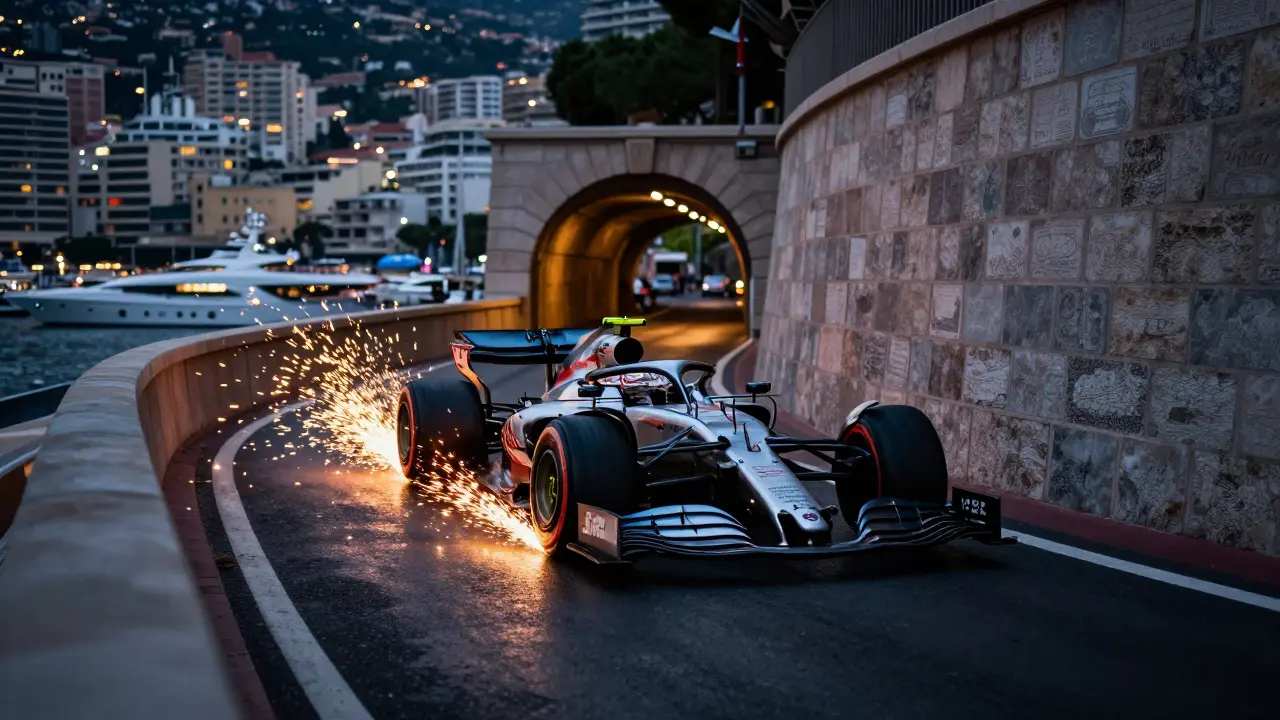
The tunnel is the most dangerous part of the track. It’s 260 meters long, and it’s the only place on the circuit where drivers go from full daylight to near-total darkness in under two seconds. Your eyes don’t adjust fast enough. The car’s aerodynamics change because the tunnel disrupts airflow. Downforce drops by 20%-just as you’re entering the tightest part of the track.
In 2024, three drivers lost control entering the tunnel. One spun into the barrier. Another clipped the wall and damaged his front wing. Both were out of the race. Teams now use special visor tints and head-up displays that show speed and braking markers inside the tunnel. But the human factor remains. You can’t simulate the shock of sudden darkness.
Drivers say it’s like driving into a black hole. You have to trust your muscle memory. Your hands know where to turn. Your feet know when to brake. Your brain just hopes it’s enough.
Why Fans Keep Coming Back
Monaco isn’t the fastest race. It’s not the loudest. It’s not even the most dramatic in terms of overtaking. In fact, overtaking is rare. In 2024, there were only 11 passes for position in the entire race. That’s less than one per lap. But that’s not why people watch.
They watch because it’s the purest test of driving skill. It’s the only race where the driver’s ability matters more than the car’s power. A mid-field team can beat a top team here if their driver is sharper. A rookie can outperform a champion if they’re calm enough.
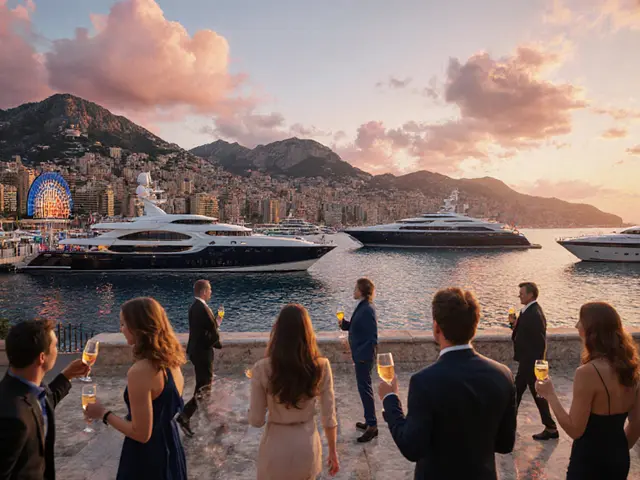
The setting doesn’t hurt. Yachts bob in the harbor. Billionaires sip champagne on balconies. The crowd is quiet, focused, respectful. There’s no blaring music, no fireworks, no distractions. Just the sound of engines, the smell of burning rubber, and the occasional gasp as a car kisses the wall.
What You’ll See in 2025
This year, the FIA introduced new safety barriers near the Swimming Pool complex. They’re taller, wider, and made of energy-absorbing foam. The goal? Reduce the risk of cars bouncing back onto the track after a hit. It’s the same kind of upgrade that’s been made to every corner over the past decade. Safety keeps improving, but the challenge doesn’t fade.
The cars are faster than ever. The 2025 F1 cars generate 15% more downforce than last year’s models. But the track hasn’t changed. The walls are still there. The kerbs are still sharp. The tunnel is still dark. The race still comes down to one thing: how well a driver can manage fear.
The winner won’t be the one with the fastest car. They’ll be the one who made the fewest mistakes. The one who stayed calm when the pressure was highest. The one who didn’t just drive the car-but owned the track.
Why is the Monaco Grand Prix so hard to win?
The Monaco Grand Prix is hard to win because the track leaves almost no room for error. With narrow streets, high walls, and no real overtaking spots, drivers must nail every corner, every brake point, and every gear shift. One mistake can end your race. Qualifying is critical-since 1996, every winner has started in the top three, and most started on pole. The car’s performance matters less than the driver’s precision.
Do F1 cars go slower in Monaco than other tracks?
Yes, in terms of top speed. F1 cars reach only about 280 km/h on the harbor straight in Monaco, compared to over 360 km/h at Monza or Bahrain. But cornering speeds are among the highest of the season-often over 180 km/h-because the track is full of tight turns that require maximum downforce. The cars are slower overall, but they’re pushed harder through corners than anywhere else.
How many laps is the Monaco Grand Prix?
The Monaco Grand Prix is 78 laps long, covering a total distance of 260.286 kilometers. This is the shortest race distance in the F1 calendar, set to ensure the race lasts around two hours. The lap length is 3.337 kilometers, making it the shortest circuit on the calendar.
Has anyone ever won the Monaco Grand Prix from outside the top three?
No, not since 1996. That year, Olivier Panis won from 14th on the grid after a chaotic race with multiple retirements. Since then, every winner has started in the top three, and 80% of winners started on pole. The lack of overtaking opportunities makes it nearly impossible to climb through the field.
Why is qualifying so important in Monaco?
Qualifying is everything in Monaco because overtaking is extremely rare. The narrow track, tight corners, and lack of long straights mean drivers can’t easily pass each other. Starting in pole position gives you a 60% chance of winning. Even starting second or third is a huge advantage. Teams spend more time perfecting qualifying setups here than at any other race.