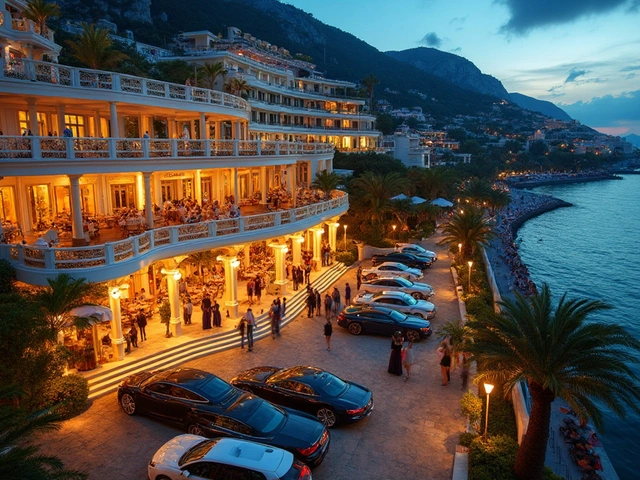
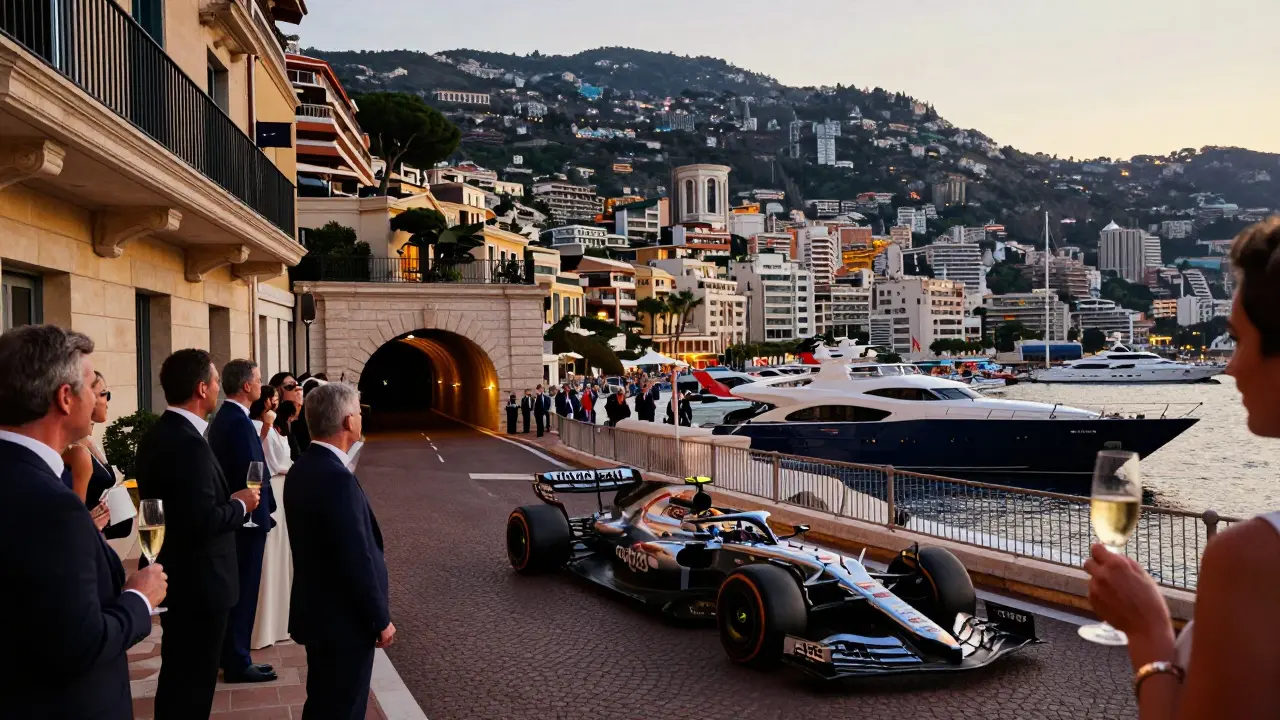
The Monaco Grand Prix isn’t just a race. It’s the only place on Earth where billionaires, movie stars, and F1 champions share the same sidewalk, sipping champagne while engines roar behind them. On the narrow streets of Monte Carlo, speed doesn’t just mean lap times-it means status, power, and an unspoken code of who’s really in the room.
The Track That Doesn’t Let You Look Away
The Circuit de Monaco is the only F1 track that feels like a real city street. No run-off zones. No safety cars waiting on standby-they’re already there, parked beside yachts. The tunnel? A sensory blackout where drivers lose all visual reference. The Mirabeau corner? A blind, uphill left that’s swallowed more careers than most circuits have had podium finishes.
In 2025, the average lap time was 1:12.384. That’s less than 73 seconds to navigate 3.34 kilometers of concrete, barriers, and history. One mistake-brushing the tire wall at Sainte-Dévote-and your race is over. No second chances. No mercy. That’s why only 12 drivers in F1 history have won here more than once. And why winning here is still the gold standard.
Who Shows Up-and Why
You won’t find fans camping out with tents and flags. The crowd here comes in tailored suits and silk dresses. The royal family of Monaco? They’re in the stands, not the pits. The CEO of a Swiss bank? He’s on a private balcony overlooking the harbor. A Hollywood producer? He’s in the paddock, not the grandstand.
The Monaco Grand Prix draws a different kind of audience. Not because it’s the most exciting race on the calendar-sometimes it’s the slowest-but because it’s the most exclusive. This is where deals get signed over canapés. Where new supercars are unveiled to buyers who already own three. Where a handshake on the terrace of the Hotel de Paris can change the course of a Formula 1 team’s future.
In 2024, over 180 private jets landed at Nice Côte d’Azur Airport in the 72 hours before the race. Most of them didn’t carry drivers or engineers. They carried investors, influencers, and heirs to fortunes that don’t need to be explained.
The Paddock: Where Power Is Measured in Yachts, Not Horsepower
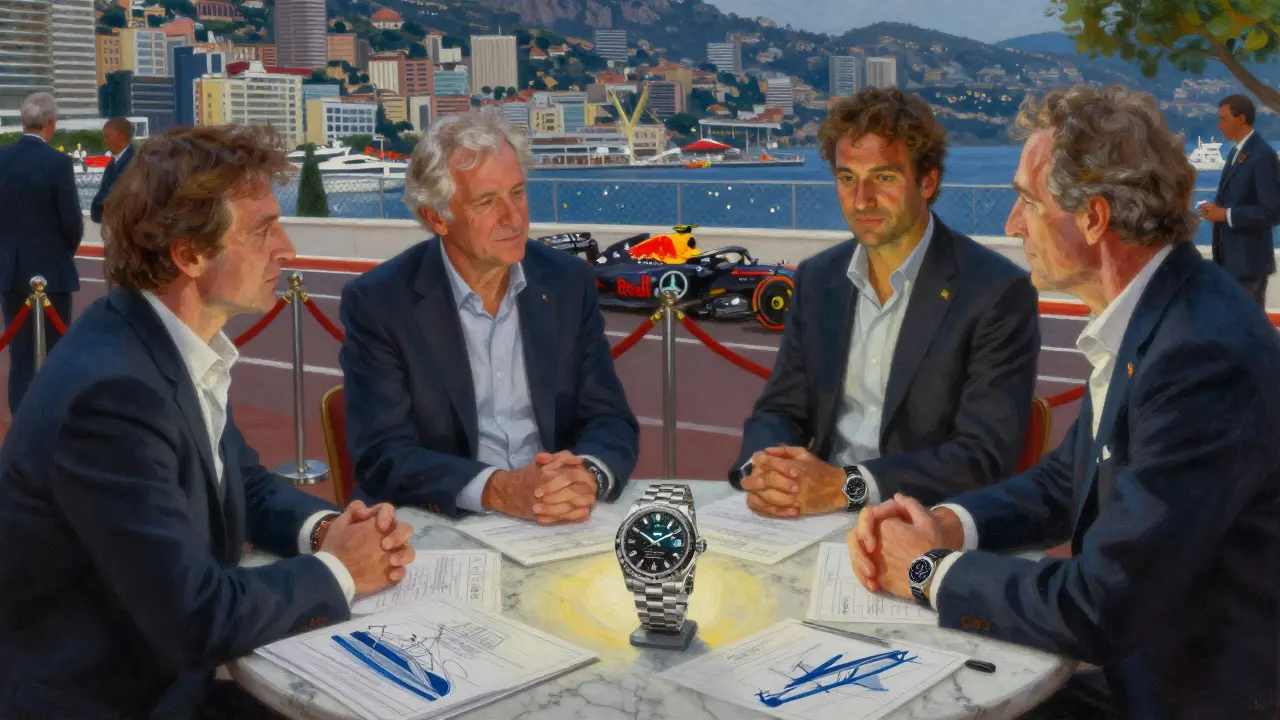
Walk into the F1 paddock at Monaco and you’re stepping into a world where money doesn’t talk-it whispers. The team garages are locked tight. Only those with VIP credentials get past the velvet ropes. Inside, you’ll find the team principals of Mercedes, Red Bull, and Ferrari in quiet conversation with owners of luxury watch brands, private equity firms, and yacht builders.
These aren’t just sponsors. They’re partners. In 2025, Rolex paid $42 million to be the official timekeeper of the Monaco Grand Prix-not because they needed the exposure, but because they needed to be seen here. Same with Pirelli. Same with Hublot. They don’t need the race. The race needs them.
And then there are the drivers. Lewis Hamilton, Max Verstappen, Charles Leclerc-they’re the stars, yes. But they’re also guests in someone else’s house. Leclerc, born and raised in Monaco, knows this better than anyone. He doesn’t just race here-he lives it. His garage is filled with family photos, not just team banners. He doesn’t win because he’s fast. He wins because he understands the weight of this place.
The Yachts, the Parties, the Unwritten Rules
Forget the after-race parties in Miami or Singapore. Monaco’s nightlife isn’t about loud music and neon lights. It’s about silence. About the sound of a champagne cork popping on a 70-meter yacht anchored just off the harbor. About the quiet nod between two men who just agreed on a $200 million deal without saying a word.
There’s a rule here: never talk about money. Never ask how much something cost. Never bring up the price of a new Bugatti or the monthly rent of a Monte Carlo penthouse. You don’t need to. Everyone already knows. The only currency that matters is access. Who you know. Who let you on the yacht. Who introduced you to the team owner.
The most talked-about party in 2025 wasn’t at the Yacht Club. It was on a private island just outside the harbor. No invites were sent. No guest list published. You were either there-or you weren’t. And if you weren’t? You didn’t miss a party. You missed the moment.
Why Monaco Still Rules F1
There are faster tracks. More thrilling overtakes. Better fan experiences. So why does Monaco still hold its crown?
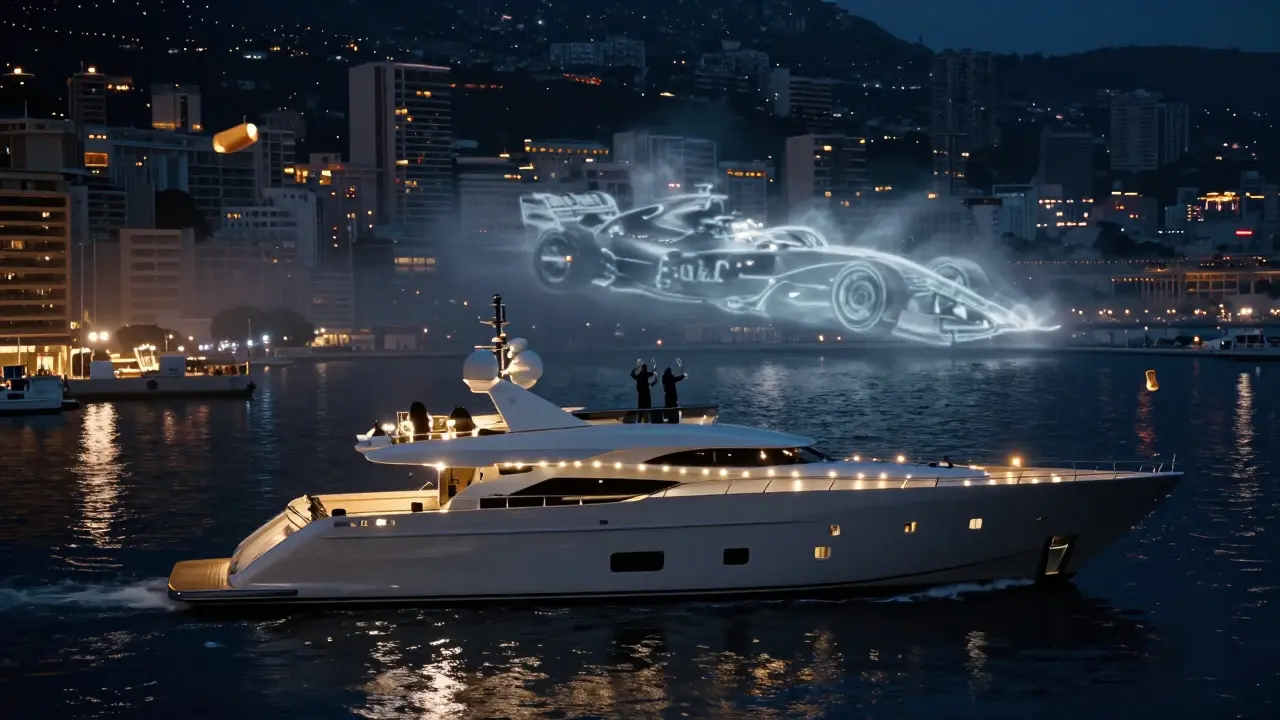
Because it’s not about the racing. It’s about the ritual. The way the entire town shuts down for four days. The way the harbor turns into a floating gallery of luxury. The way a 19-year-old mechanic from Tunisia can stand behind a barrier and watch the same corner where his idol won his first race-20 years ago.
It’s the only race where the winner doesn’t just get a trophy. They get a lifetime pass to a world few ever see. A world where the fastest cars on Earth are just one part of a much bigger game.
What Happens When the Checkered Flag Drops
When the race ends, the real event begins. The podium celebration is short. The press conference? Brief. The real stories unfold later.
A tech billionaire buys a stake in a mid-tier F1 team. A Russian oligarch hires a new driver for next season. A fashion designer launches a limited-edition watch tied to the race. A 22-year-old engineer from Brazil gets invited to join a top team after being spotted by a team manager on the pit wall.
Monaco doesn’t just crown a champion. It opens doors. It makes connections. It turns strangers into partners. And it reminds everyone-no matter how rich, how fast, or how famous-that in this city, on this track, the real winners aren’t the ones who cross the line first. They’re the ones who know how to stay.
Why is the Monaco Grand Prix considered the most prestigious race in Formula 1?
It’s the only race held on public city streets with no run-off areas, making it the most technically demanding. Winning here requires precision, nerve, and flawless execution. It’s also the oldest race on the calendar, dating back to 1929, and has been won by legends like Fangio, Senna, and Schumacher. But beyond the track, it’s the exclusivity-the presence of royalty, billionaires, and industry leaders-that cements its status as the crown jewel of F1.
Can the public attend the Monaco Grand Prix without a VIP pass?
Yes, but access is limited. General admission tickets are sold for standing areas along the circuit, like the famous Tabac corner or the harbor-side grandstands. These tickets are hard to get-often sold out months in advance. But they don’t grant access to the paddock, the VIP lounges, or the yachts. Those require official invitations or expensive hospitality packages that can cost over $10,000 per person.
How much does it cost to attend the Monaco Grand Prix as a VIP?
VIP packages range from $5,000 to $50,000 per person, depending on access. A basic paddock pass with catering might cost $8,000. A private balcony overlooking the harbor with a dedicated butler and helicopter transfer can exceed $45,000. Many packages include exclusive events-like yacht dinners or meet-and-greets with drivers-that aren’t available to the public.
Do drivers really care about the social scene at Monaco?
Some do, some don’t. But all of them know it matters. Drivers like Charles Leclerc and Lando Norris have spoken openly about how relationships formed at Monaco lead to sponsorships, team opportunities, and long-term careers. A handshake with a team owner on the terrace isn’t just small talk-it’s the difference between a seat next year or being on the sidelines. The track is where they race. The parties are where they build their future.
Is the Monaco Grand Prix still relevant in today’s F1?
More than ever. While newer races offer bigger crowds and flashy lights, Monaco delivers something no other race can: authenticity. It’s the only track that hasn’t been modernized to suit TV cameras. It still feels raw, real, and dangerous. And in an era of corporate F1, it remains the one event where tradition, wealth, and speed still collide without compromise. Teams still fight harder to win here than they do at Abu Dhabi or Las Vegas.