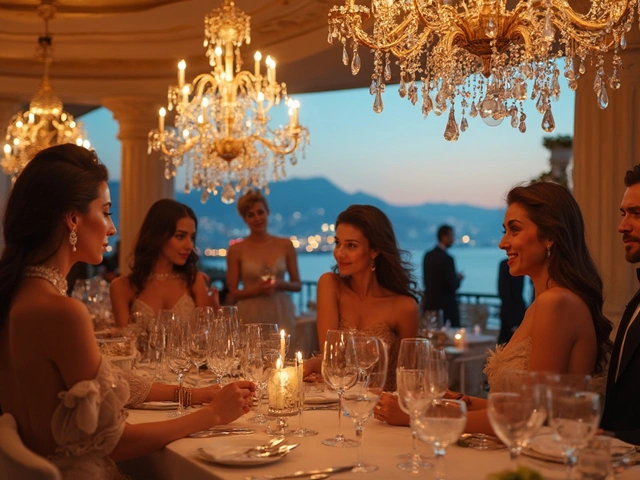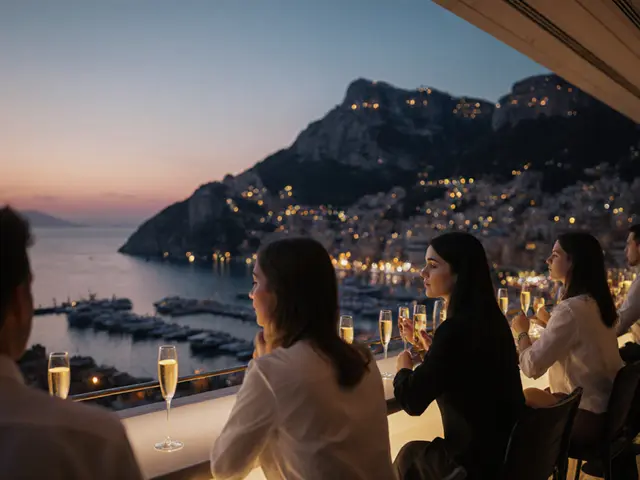
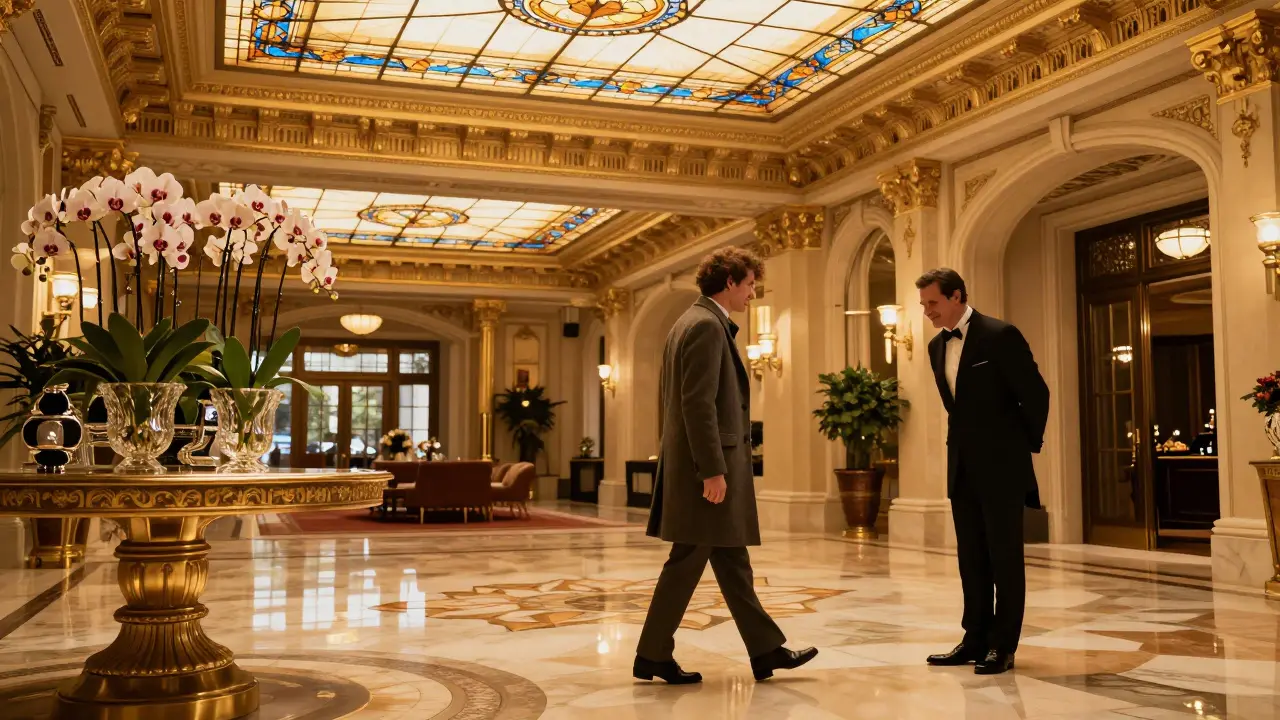
When you step into the lobby of Hotel Hermitage Monte Carlo, the air changes. It’s not just the scent of fresh orchids or the hush of polished marble underfoot. It’s the quiet understanding that this isn’t just a place to sleep. It’s a stage for moments that don’t fit into ordinary life.
A Legacy Carved in Stone and Service
Opened in 1890, Hotel Hermitage has watched Monte Carlo evolve from a quiet fishing village into one of the world’s most exclusive destinations. But it never changed to chase trends. Instead, it deepened. The original Belle Époque architecture still stands-gilded moldings, stained glass ceilings, wrought-iron balconies overlooking the Mediterranean. The hotel didn’t renovate to look new. It restored to feel timeless.Guests don’t check in. They’re welcomed. A doorman remembers your name after one stay. A concierge knows you prefer your coffee black, with a single sugar, served at 7:15 a.m. without being asked. This isn’t automation. This is human memory, cultivated over decades.
Rooms That Feel Like Private Villas
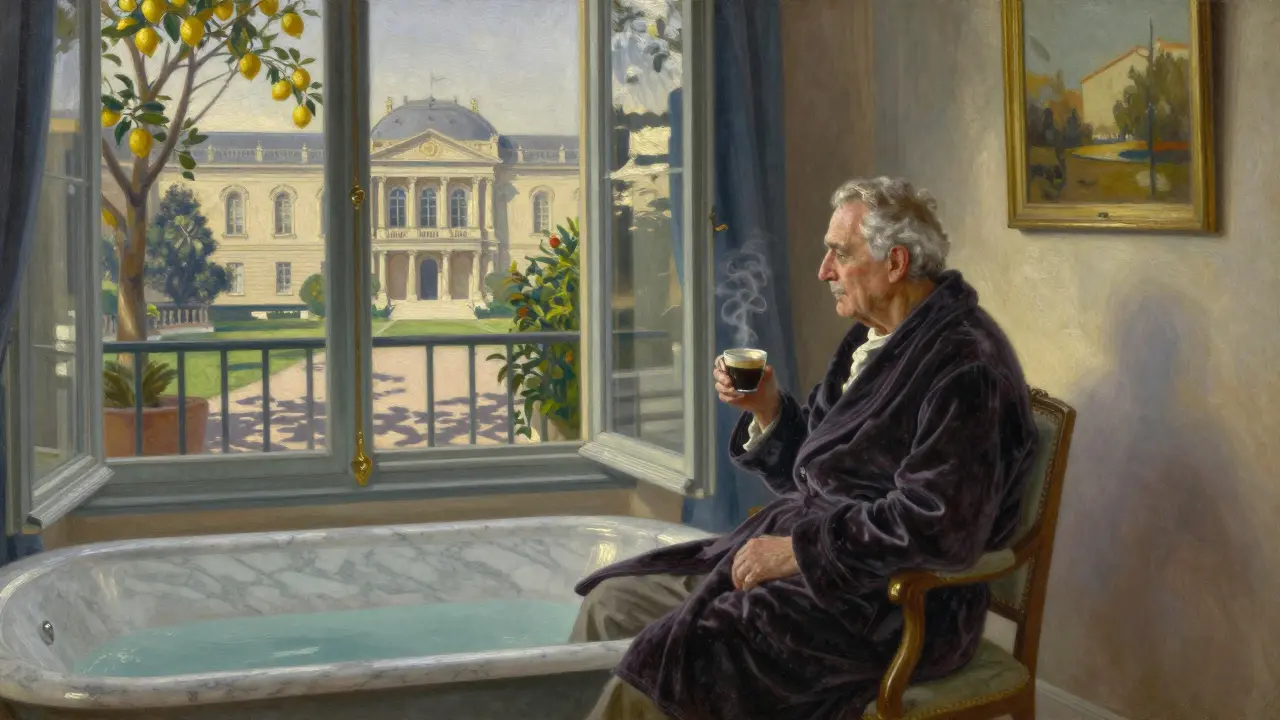
There are 108 rooms and suites. None are the same. Some have private terraces with views of the Prince’s Palace. Others open onto secluded courtyards lined with lemon trees. The largest suites include butler service, original artwork from the 1920s, and soaking tubs carved from Carrara marble.One guest, a retired French diplomat, stayed in Suite 307 for 17 consecutive winters. He never asked for a change. "It’s not the view," he told the manager once. "It’s the silence. You can hear your own thoughts here. That’s rare."
Each room has temperature-controlled linens, blackout curtains that seal out the entire Mediterranean sun, and a minibar stocked with local wines from Domaine du Château d’Antonin-not the usual international brands. The minibar isn’t marked up. It’s priced like a local grocery.
The Restaurant That Doesn’t Try to Impress
Le Vistamar, the hotel’s Michelin-starred restaurant, doesn’t have a menu. Not in the traditional sense. When you arrive, the chef asks: "What do you remember tasting as a child?" Then he builds a meal around it.One guest, a Japanese businessman from Tokyo, said he remembered his grandmother’s miso soup with sea urchin. Three hours later, he was served a deconstructed version-sea urchin foam, black truffle dashi, a single drop of yuzu gel that burst like a pearl. He cried. He didn’t say why. No one asked.
The wine list has 1,200 bottles. Only 12 are from outside Monaco. The rest are from vineyards within 50 kilometers. The sommelier doesn’t recommend. He listens. Then he brings you two glasses. One you’ll love. One you’ll hate. You’ll remember both.
Where the Sea Meets the Spa
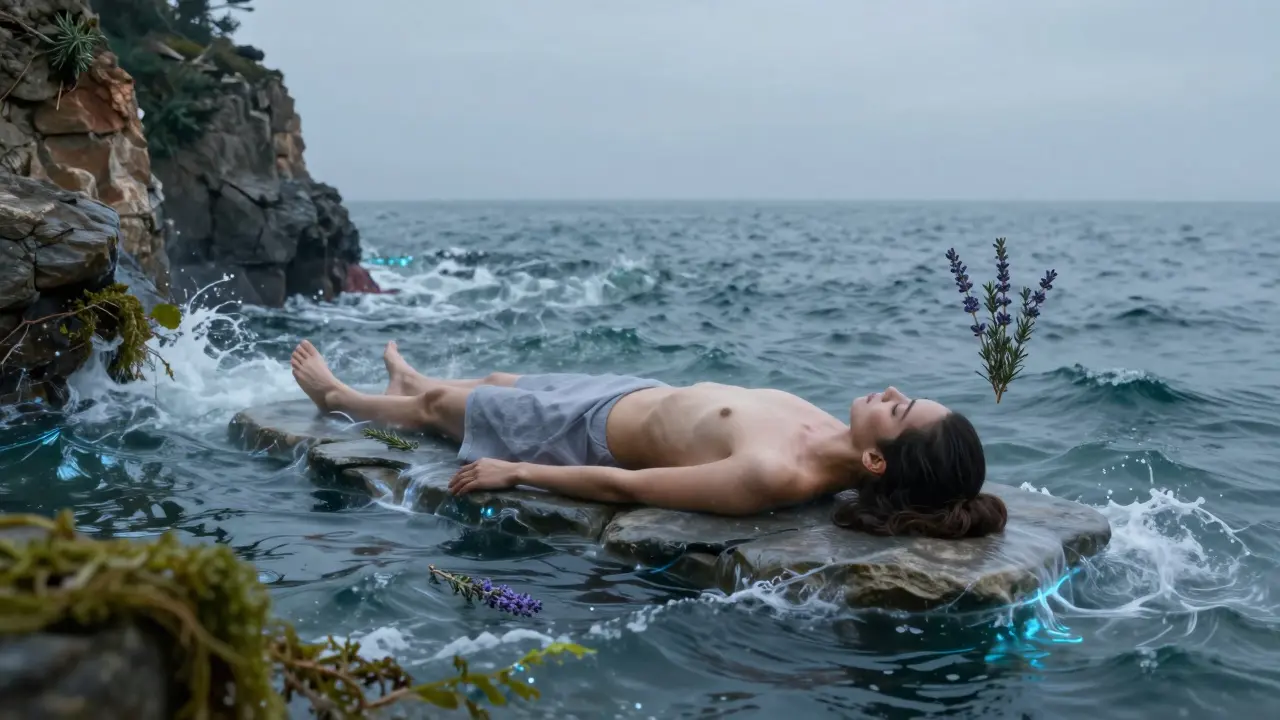
The spa doesn’t have a name. It’s just called "The Sea Room." It’s built into the cliffside, with floor-to-ceiling glass that opens to the water. Treatments use algae harvested at dawn from the nearby coves. The massage oils are infused with local lavender and wild rosemary picked by hand.There are no clocks. No phones allowed. The staff doesn’t say "relax." They simply leave you alone. One guest spent four hours lying on the heated stone slab, watching the tide roll in. When she finally stood up, she didn’t say a word. She just walked back to her room and packed. She checked out the next morning. She hasn’t returned. But she sends a postcard every year on the same date.
Exclusive Access, Not Just Privilege
Staying at Hermitage doesn’t mean you get a VIP pass to the casino. It means you get access to places the casino won’t even let you know exists.The hotel arranges private tours of the Oceanographic Museum after hours. You walk through empty halls lit only by the glow of preserved jellyfish. You stand where Jacques Cousteau once stood, holding the same brass telescope he used to study the Mediterranean currents.
For guests who want to sail, the hotel provides a 1950s vintage yacht, restored to its original condition. No captain. No crew. Just you, the sea, and a chart drawn by the hotel’s longtime captain, who still walks the docks every morning.
Why It Doesn’t Need to Be the Biggest
Monte Carlo has newer hotels. Bigger. Flashier. With infinity pools that spill into the ocean and rooftop bars that charge $300 for a cocktail.Hermitage doesn’t compete. It doesn’t need to. It doesn’t have a pool. It has a private beach cove, accessible only to guests. The water is so clear you can see the sea urchins at your feet. No umbrellas. No music. Just the sound of waves and the occasional cry of a seagull.
There’s no fitness center. But you can climb the 127 steps to the top of the hill behind the hotel. At the summit, you’ll find a bench made from the wood of a shipwreck that washed ashore in 1978. No plaque. No sign. Just the view of the entire Principality.
What It Costs-And What It Doesn’t
A night in a standard room starts at €1,200. Suites go up to €8,500. That’s steep. But it’s not the price that surprises people. It’s what’s included.There are no resort fees. No hidden charges. Breakfast is a multi-course affair served on your terrace or in the garden. Champagne is poured at 5 p.m. daily-no strings attached. A private car picks you up from the airport and waits for you, no matter what time you arrive.
And if you leave something behind? A scarf, a book, a pair of sunglasses? It’s mailed to you the next day, wrapped in tissue paper, with a note: "We thought you might miss this."
Who Comes Here-And Why They Never Really Leave
Celebrities come. Politicians. Artists. Billionaires. But you won’t see them. They don’t want to be seen. They come because this place doesn’t ask for anything.It doesn’t ask you to be famous. To be rich. To be interesting. It simply asks you to be present.
One woman came after her husband passed away. She stayed for three weeks. She didn’t leave her room for the first five days. Then she started walking the cliffs. One morning, she asked the concierge if she could plant a rose in the garden. He brought her a seedling of the same variety her husband had grown in their backyard in Geneva. She still visits every autumn. She doesn’t stay in the hotel anymore. She rents a villa nearby. She says she’s waiting for the rose to bloom.
That’s the thing about Hotel Hermitage. It doesn’t sell luxury. It sells belonging. Not to a brand. Not to a place. But to a feeling-the kind you forget exists until you’re back in the real world, and you realize you’ve been holding your breath.
When You Go, Remember This
Don’t book it because it’s famous. Don’t book it because it’s expensive. Book it because you need to remember what silence sounds like. What time feels like when no one is rushing you. What it’s like to be treated not as a guest-but as someone who matters.There’s no app to book a room. No online promo code. No loyalty points. You call. You speak to a person. And if they sense you’re ready-for the quiet, for the truth, for the space to just be-you’ll get a room.
And when you leave? You won’t think about the price. You’ll think about the way the light fell on the marble floor at 6:47 a.m. That’s the moment you’ll remember. Not the room. Not the view. The quiet.