The Monaco Yacht Show isn’t just another boat show. It’s where billionaires, designers, and engineers gather not to talk about engines or sails-but about exclusivity, innovation, and the quiet power of owning something no one else can.
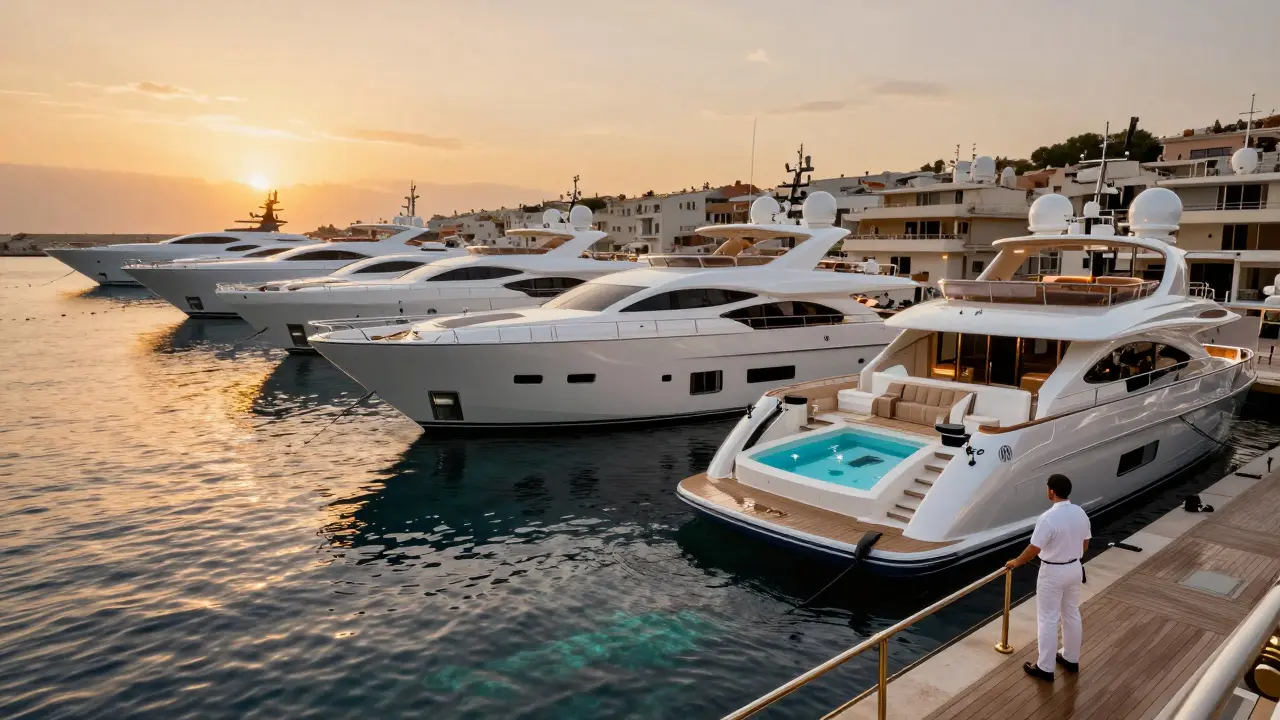
Every September, Port Hercules in Monaco transforms into a floating museum of engineering art. Over 130 yachts, most of them over 30 meters, line the harbor. Some are brand new, still smelling of fresh varnish. Others are custom-built masterpieces that took five years to complete. You won’t find a single mass-produced model here. Every vessel is a statement.
What Makes These Yachts So Different?
It’s not just size. It’s what’s inside. One 90-meter yacht last year had a 12-meter swimming pool with a glass bottom that let you see the Mediterranean below. Another had a helipad that doubled as a rooftop cinema. There’s a 75-meter yacht with a submarine docked in its stern-yes, a real, functional submarine that fits inside the hull and launches from a hidden bay.
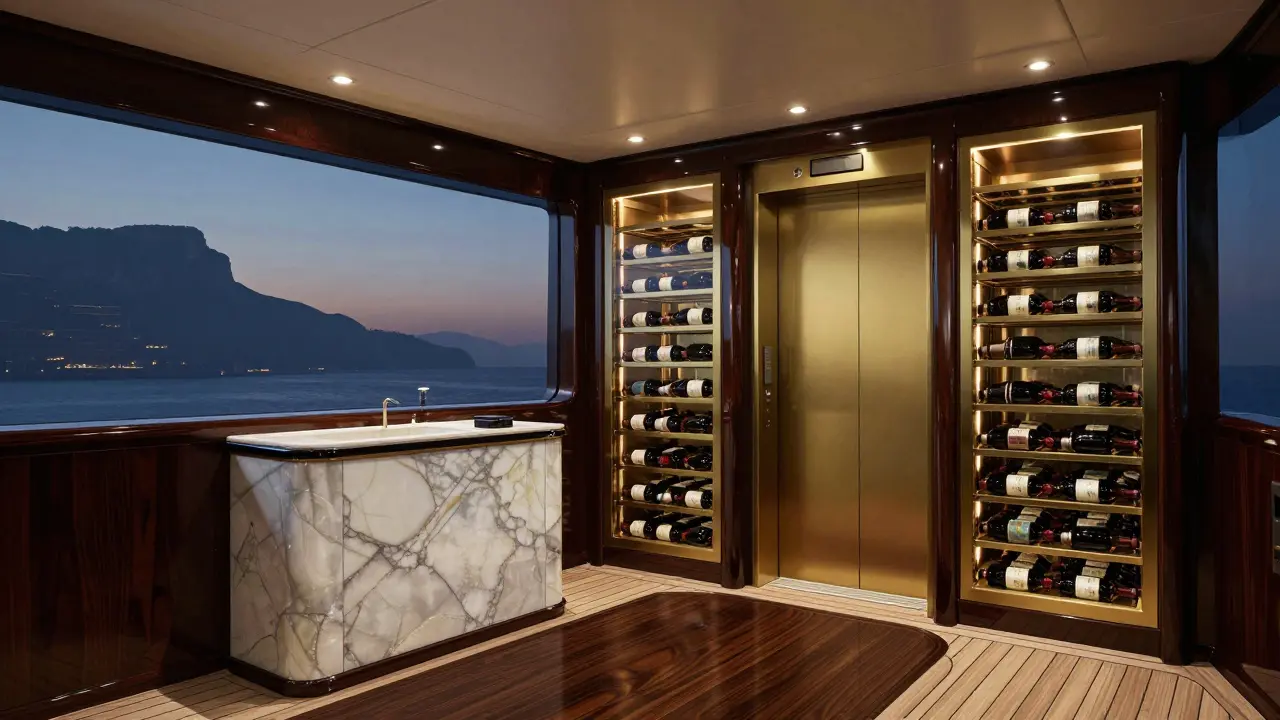
Materials matter too. Teak decks are hand-sanded by artisans who’ve worked on these boats for decades. Interiors use rare woods like Macassar ebony and inlays of mother-of-pearl. Cabins are lined with Italian leather stitched by hand. Some yachts have elevators. Others have wine cellars that hold over 1,000 bottles, climate-controlled to the exact degree each varietal needs.
And the tech? Forget smart homes. These are smart oceans. AI-driven navigation systems, silent electric thrusters, and hull coatings that reduce drag by 18%-all developed in secret labs and tested in the North Sea before being installed. One yacht’s water purification system can turn seawater into bottled-quality water for 40 guests, every day, without a single plastic bottle.
The People Behind the Yachts
You won’t see the owners waving from the deck. Most stay out of sight. But you’ll spot their representatives: yacht brokers in bespoke suits, naval architects from Italy and the Netherlands, and designers from Paris and London who’ve spent years sketching ideas on napkins before turning them into reality.
Superyacht builders like Lürssen, Feadship, and Oceanco don’t just sell boats-they build legacies. A single Feadship can cost between $150 million and $400 million. The price doesn’t just cover materials. It pays for 500,000 labor hours, 300 engineers, and a team of 20 chefs who train for months to serve meals that match the yacht’s theme-whether it’s Japanese minimalism or Art Deco opulence.
Even the crew is elite. Captains have decades of experience navigating the world’s most dangerous waters. Chefs come from Michelin-starred kitchens. Stewards are trained in etiquette, sommelier skills, and emergency medical response. One yacht last year had a full-time neuroscientist on staff to manage crew sleep cycles during long transits.
The Show Isn’t Just About Boats
Outside the yachts, the show is a spectacle of luxury. The land-side pavilions feature high-end watchmakers like Patek Philippe and Richard Mille displaying timepieces that cost more than a small car. Jewelry designers from Geneva set up displays with diamonds the size of walnuts. Art galleries hang original works by contemporary artists who’ve never sold at auction before.
There’s a section dedicated to underwater drones that film coral reefs without disturbing marine life. Another showcases sustainable fuel systems that cut emissions by 70%-a direct response to pressure from environmental regulators and wealthy owners who now demand greener options.
And then there’s the food. Michelin-starred chefs host pop-up dinners on floating platforms. One night last year, a chef from Copenhagen served a 12-course meal made entirely from ingredients sourced within 100 kilometers of Monaco. Each dish came with a digital tablet showing the exact location where the lobster was caught or the truffle was harvested.
Who Can Attend?
It’s not open to the public. Tickets cost €450 for a single day and are only sold to pre-approved guests. You need an invitation from a yacht builder, broker, or sponsor. Or you need to prove you’ve owned a vessel over 25 meters in the past five years. No exceptions.
But you don’t need to own a yacht to feel its pull. Journalists, designers, and even engineers from rival companies come to study trends. A Russian tech billionaire bought a yacht last year after seeing a solar-powered hull design at the show. A Swiss watchmaker redesigned its entire line after noticing how yacht interiors used light and shadow to create mood.
Why This Event Still Matters
In a world where luxury is often about logos and labels, the Monaco Yacht Show is one of the last places where true craftsmanship still rules. There are no branded logos on the yachts. No flashy billboards. Just silence, steel, and seawater.
This is where the future of ocean travel is being written. Electric propulsion. Hydrogen fuel cells. Autonomous docking systems. All tested here first. The show doesn’t just display wealth-it drives innovation.
And while the rest of the world rushes to the next viral trend, the Monaco Yacht Show moves at its own pace. It takes years to build a yacht. It takes decades to build a reputation. And in this harbor, reputation is the only currency that matters.
What’s New in 2025?
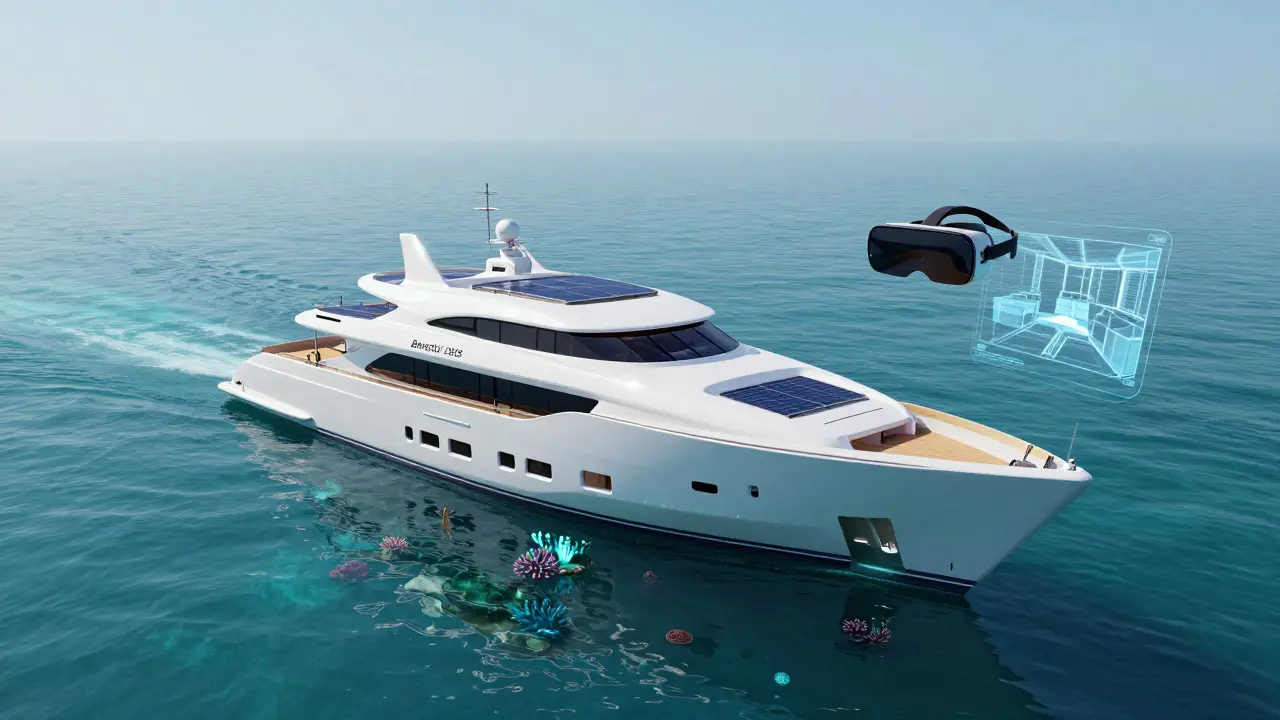
This year’s show introduced the first fully carbon-neutral superyacht. Built by Benetti, it runs on green hydrogen stored in cryogenic tanks and generates its own electricity through solar sails embedded in the canopy. It doesn’t need a generator. It doesn’t emit a single molecule of CO2. And it cost $280 million.
Another highlight: a 65-meter yacht with a living reef wall in its hull. The structure grows coral and attracts marine life, turning the yacht into a mobile marine sanctuary. It’s not just eco-friendly-it’s regenerative.
And for the first time, a yacht manufacturer offered a digital twin of its vessel. Buyers can now walk through a VR replica of their future yacht before construction begins-adjusting layouts, materials, and lighting in real time.
| Feature | Example | Why It Matters |
|---|---|---|
| Green Hydrogen Propulsion | Benetti’s 72-meter vessel | Zero emissions, silent operation, 50% less maintenance |
| Living Reef Hull | Oceanco’s Coral Horizon | Supports marine biodiversity while sailing |
| AI-Driven Interior Climate | Feadship’s Serenity | Adjusts humidity, temperature, and scent per room |
| VR Customization Platform | Lürssen’s Digital Blueprint | Build your yacht in VR before steel is cut |
| Submarine Integration | Custom 85-meter yacht | Allows private underwater exploration without a support vessel |
What You Won’t See on Social Media
You won’t see the 3 a.m. meetings in the VIP lounge where deals worth hundreds of millions are signed over single glasses of 1945 Château Mouton Rothschild. You won’t see the engineers pulling all-nighters to fix a flaw in a propeller shaft that’s off by 0.02 millimeters. You won’t see the crew members who’ve been with the same yacht for 12 years, knowing every creak in the deck like a family member’s heartbeat.
The Monaco Yacht Show isn’t about Instagram posts. It’s about legacy. It’s about the quiet pride of building something that lasts longer than trends, politics, or even fortunes.
Can anyone attend the Monaco Yacht Show?
No, it’s not open to the general public. Attendance requires an invitation from a yacht builder, broker, sponsor, or proof of ownership of a superyacht over 25 meters. Tickets cost €450 per day and are strictly limited to pre-approved guests.
How much does a yacht at the Monaco Yacht Show cost?
Prices range from $50 million for a well-equipped 40-meter yacht to over $400 million for custom-built superyachts over 90 meters. The average cost for a new vessel at the show is around $180 million. Maintenance alone can cost 10% of the purchase price annually.
Are there eco-friendly yachts at the show?
Yes, 2025 marked a turning point. Five yachts now run on green hydrogen, and three feature living reef systems that enhance marine ecosystems. Solar sails, zero-emission thrusters, and water recycling systems are now standard features on new builds, not just novelties.
How long does it take to build a superyacht?
On average, it takes 3 to 5 years from design to delivery. Complex custom builds can take up to 7 years. The timeline includes 18 months just for design approvals, 12 months for hull construction, and another 12-18 months for interior fitting and testing.
What’s the biggest yacht ever shown at the Monaco Yacht Show?
The largest yacht ever displayed was the 180-meter Azzam, owned by Sheikh Khalifa bin Zayed Al Nahyan. It was shown in 2015 and remains the longest private yacht in the world. While it hasn’t returned since, its design still influences new builds today.
What Comes Next?
The next decade will see more yachts designed for long-term oceanic living-not just luxury getaways. Some are being built as floating research stations. Others as mobile art galleries or private climate shelters. The line between yacht and habitat is fading.
One thing won’t change: the Monaco Yacht Show will remain the one place where wealth, art, and engineering collide without apology. It’s not about showing off. It’s about pushing boundaries. And in a world that’s rushing forward, sometimes the most powerful statement is to slow down-and build something that lasts.