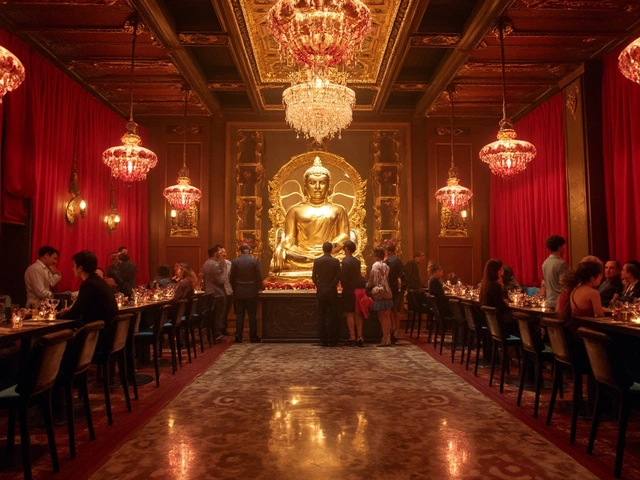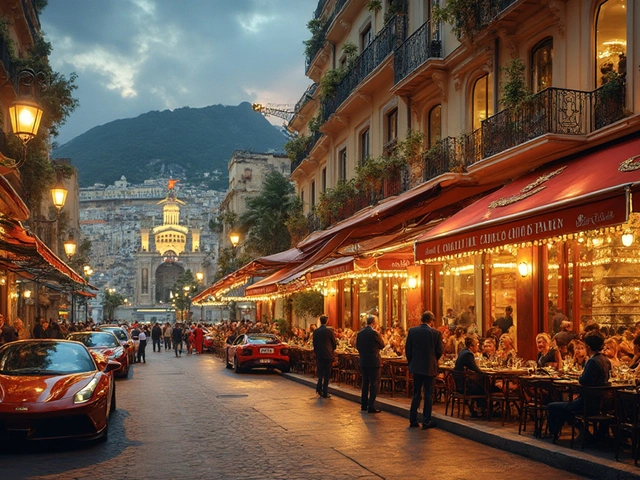
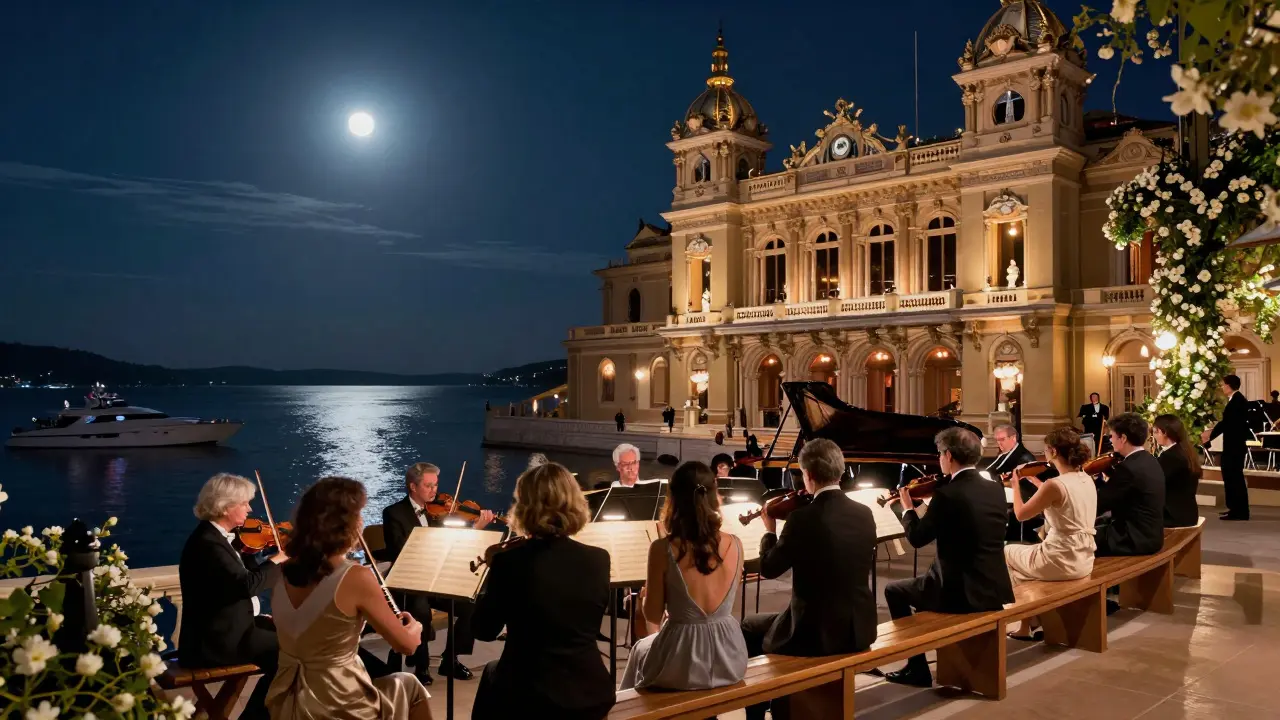
The Monte Carlo Summer Festival isn’t just another event on a calendar. It’s the moment when the Mediterranean lights up, the yachts glow with neon reflections, and the air smells like salt, jasmine, and expensive perfume. If you’ve ever thought Monaco was just about Formula 1 and high-stakes casinos, you’re missing the real magic - the six-week stretch from late June to early August when the entire principality becomes a living stage.
It’s Not Just a Festival - It’s a Cultural Explosion
The Monte Carlo Summer Festival started in the 1950s as a small concert series for local aristocrats. Today, it’s a global draw, pulling in over 80,000 visitors annually. The lineup changes every year, but the formula stays powerful: world-class classical music, avant-garde theater, and jazz legends all under the stars at the Opéra de Monte-Carlo. In 2024, the festival featured a surprise performance by the Berlin Philharmonic playing Debussy under a full moon, followed by a live DJ set from a Grammy-winning producer on the Prince’s Palace terrace. That blend - old-world elegance meeting modern edge - is what makes it unforgettable.
Unlike other summer festivals that feel crowded or commercialized, this one keeps its exclusivity without being cold. You won’t find plastic cups or long lines for overpriced water. Instead, you’ll get hand-carved ice sculptures at the opening gala, free champagne tastings from local vineyards, and a curated selection of gourmet food trucks serving truffle-infused socca and grilled octopus with saffron aioli.
Where the Music Meets the Sea
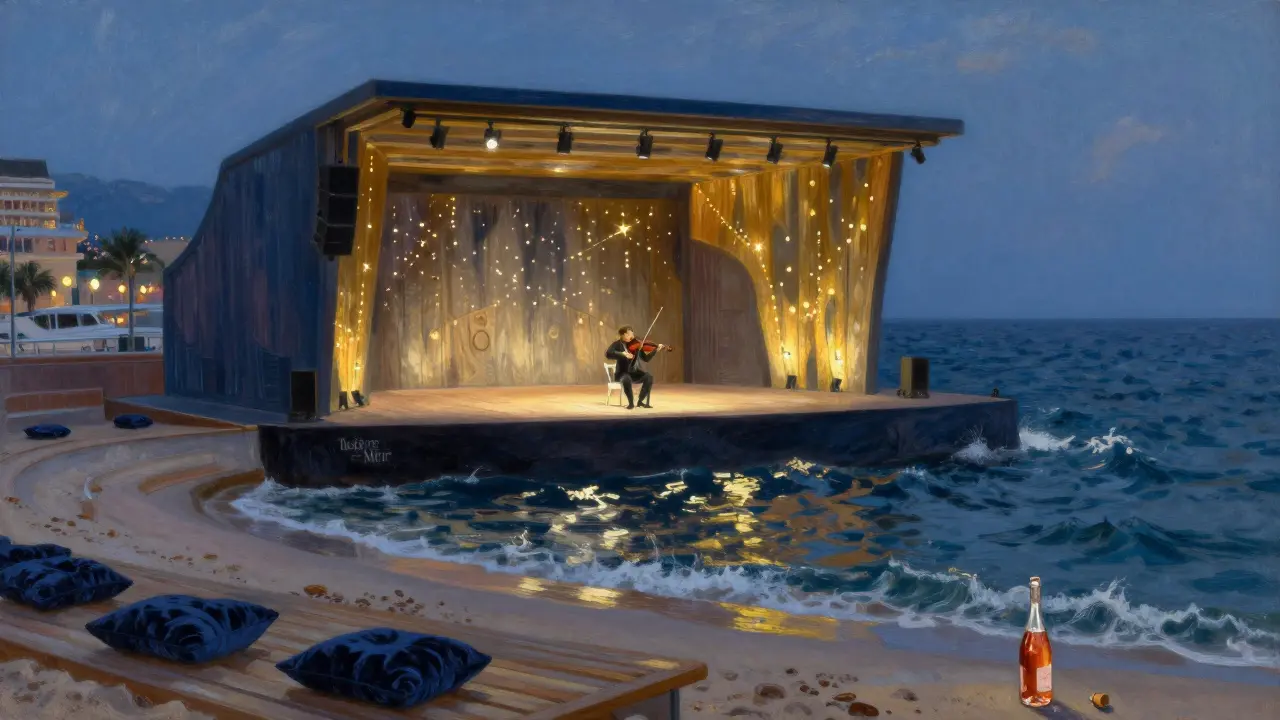
The festival’s magic isn’t just in the venues - it’s in the setting. Imagine sitting on a velvet cushion at the Théâtre de la Mer, a temporary open-air stage built right on the edge of the harbor. Behind you, the lights of Monte Carlo twinkle. In front, the Mediterranean rolls in, calm and dark. When the orchestra plays Ravel’s Daphnis et Chloé, the waves seem to pulse with the music. That’s not marketing. That’s what actually happens.
There’s also the Beach Club Sessions - nightly performances on the sands of Larvotto Beach. You’ll hear everything from a solo violinist playing Piazzolla to a live electronic set synced to projected light shows over the water. No tickets needed. Just show up with a towel, a bottle of rosé, and your phone turned off. Locals do it. Tourists who’ve been before do it. Everyone who’s been once comes back.
The People Who Make It Real
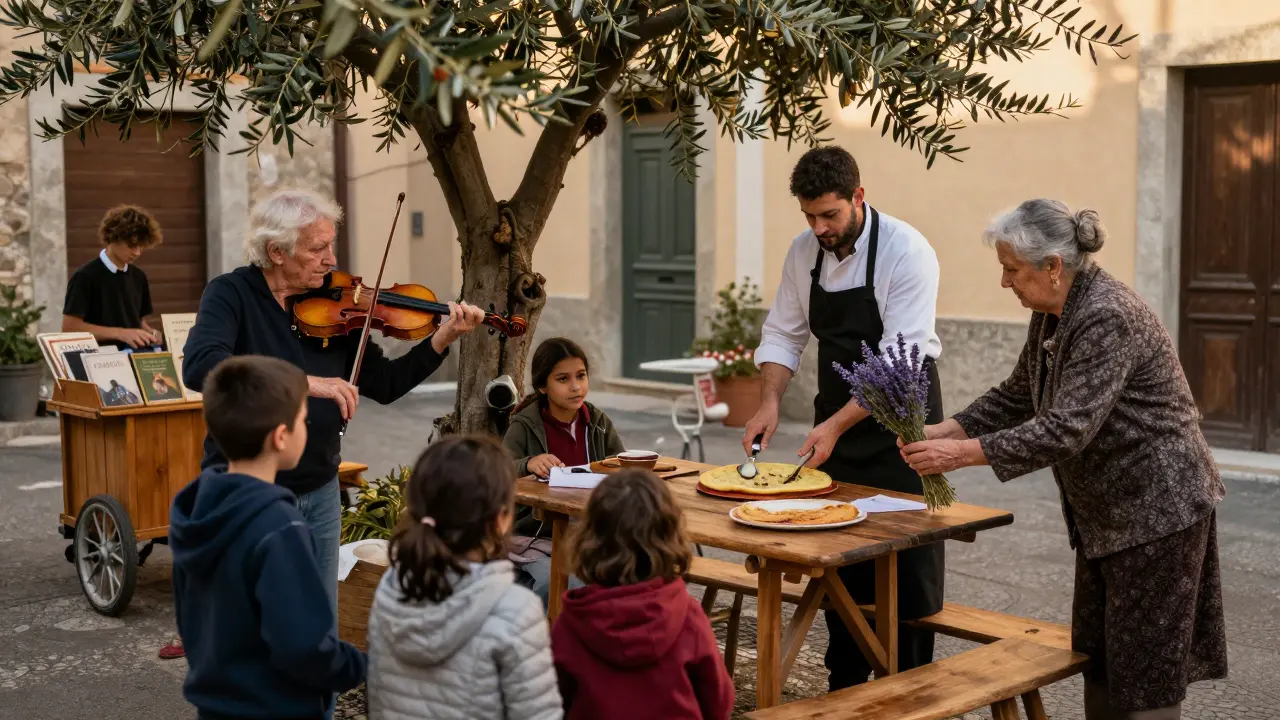
What sets this festival apart isn’t the stars - it’s the unseen hands. The 78-year-old violinist who still teaches free morning classes to kids from the Côte d’Azur’s immigrant communities. The chef who spends three weeks each summer cooking traditional Ligurian dishes for homeless families, funded by private donations from festival patrons. The retired opera singer who sits on a bench near the casino each evening and sings arias to anyone who stops to listen.
You’ll see them everywhere. The woman in a silk dress handing out free bouquets of lavender to strangers. The teenager who runs the pop-up bookstand selling first editions of Colette’s works - all proceeds go to a local theater school. This isn’t a festival designed for Instagram. It’s one built for connection.
What You Won’t Find (And Why That Matters)
There are no branded tents. No corporate sponsors plastered on every surface. No influencers being paid to pose in front of a fountain. The festival’s budget comes from private foundations, ticket sales, and the Principality of Monaco itself - not from energy drinks or luxury car brands.
That’s why you won’t see a single selfie stick at the main concerts. That’s why the seating at the Opéra is still wooden, not padded, and the program is printed on recycled paper with hand-stitched bindings. It’s not about being cheap - it’s about being intentional. The festival refuses to become a product. It stays an experience.
How to Actually Go - No Fluff, Just Facts
If you’re planning to go in 2025, here’s what you need to know:
- Book early - but not too early. Tickets for the biggest shows (like the opening night or the final symphony) go on sale January 15. They sell out in under 72 hours. But many smaller events - like the beach concerts or the poetry readings - don’t require tickets at all.
- Stay local. Hotels in Monte Carlo fill up fast, but you’ll get better value staying in Beausoleil or La Turbie. Trains run every 12 minutes to Monte Carlo station. A one-way ticket costs €3.50.
- Dress for the vibe. No tuxedos required. Smart casual is the rule: linen shirts, sundresses, clean sandals. You’ll stand out if you wear shorts or flip-flops to the Opéra - not because it’s snobby, but because everyone else is dressed like they’re going to a dinner party with friends.
- Bring cash. Many food stalls, book carts, and artisan vendors don’t take cards. Bring €100 in small bills. You’ll want to buy a handmade ceramic bowl from the local potter or a bottle of local lavender honey.
- Go early. Stay late. The best moments happen after midnight. The final concert ends at 11:30 PM. By 12:30 AM, the crowd thins, the lights dim, and the musicians sometimes play an impromptu encore on the steps of the casino. That’s when the real magic happens.
Why It’s Still Worth It in 2025
There are dozens of summer festivals in Europe. Some are bigger. Some are cheaper. None feel like this one.
This isn’t about seeing famous names. It’s about feeling something rare: a place where art isn’t a commodity, where beauty isn’t packaged, and where people still gather not to be seen, but to be moved. In a world that’s louder, faster, and more commercialized every year, the Monte Carlo Summer Festival holds the line. It doesn’t shout. It whispers. And if you listen closely, you’ll hear why it’s still one of the most meaningful things you can do in Europe this summer.
Is the Monte Carlo Summer Festival worth the cost?
Yes - if you value authentic experiences over flashy ones. While some concerts cost up to €250, over 60% of the events are free. The real value isn’t in the ticket price - it’s in the atmosphere, the intimacy, and the chance to see world-class artists perform in a setting you won’t find anywhere else. Many attendees say it changed how they think about live music.
Can I go with kids?
Absolutely. The festival has a dedicated family program with free workshops, storytelling sessions, and child-friendly performances. The beach concerts are especially popular with families. Many parents bring picnics and stay until sunset. There are even baby-changing stations near the main venues.
Do I need to speak French or Italian?
No. While the region is multilingual, all official programs, announcements, and staff at major venues speak English. Most artists perform without dialogue - music, dance, and theater transcend language. Locals appreciate it when you try a few words of French, but you won’t be turned away for not speaking it.
Is it safe at night?
Monaco has one of the lowest crime rates in Europe. The festival area is well-lit, patrolled by security, and filled with people from all over the world. Walking back from the beach after midnight is common. Just use common sense - don’t flash valuables, and stick to main paths. The local police are helpful and speak multiple languages.
What’s the weather like during the festival?
Expect warm days (24-29°C / 75-84°F) and mild nights (18-22°C / 64-72°F). The sea is perfect for swimming. Rain is rare - less than 3 days of rain total over the six weeks. Humidity is low, so it feels comfortable even in the sun. Pack light layers, sunscreen, and a small umbrella just in case.