When you watch the Monaco Grand Prix, you don’t just see cars racing. You see physics pushed to its limit, drivers holding their breath for 3.3 kilometers, and speed that feels like it’s bending reality. The track isn’t long - just over 3.3 kilometers - but it’s the slowest circuit on the F1 calendar. And yet, it demands the highest level of precision, nerve, and raw speed control of any race on the planet.
Why Speed Feels Different in Monaco
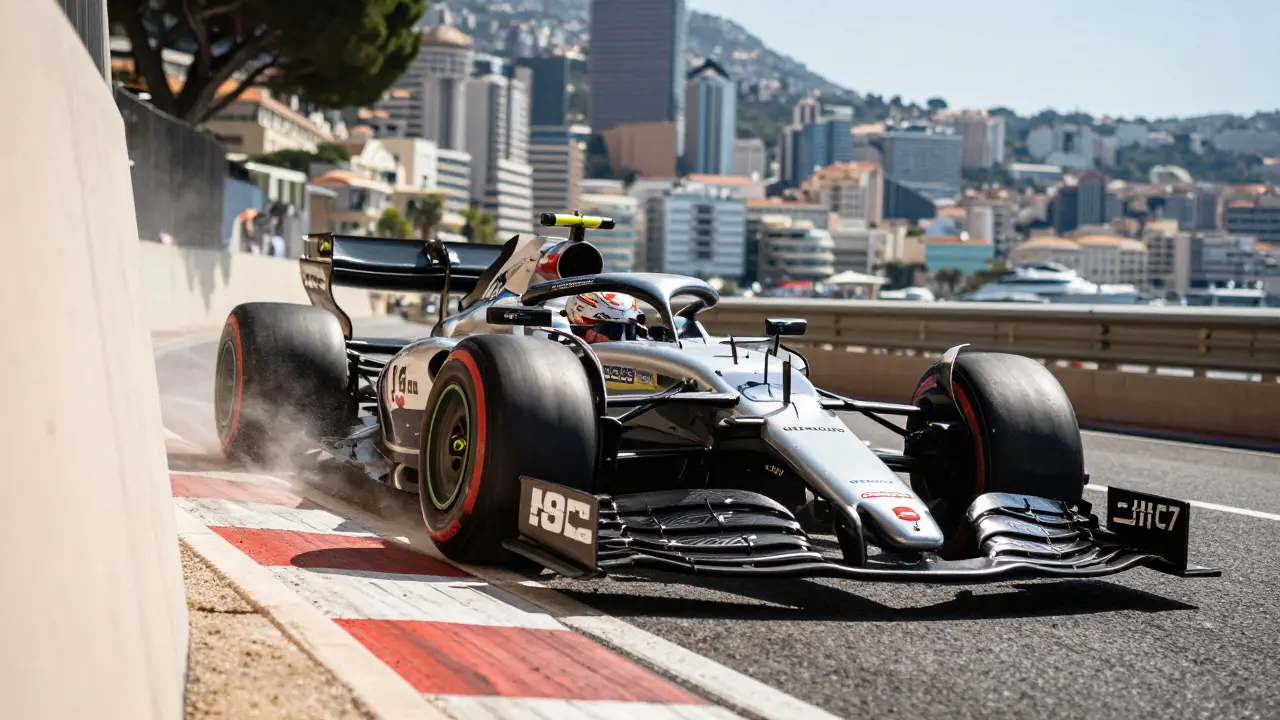
At first glance, the average speed in Monaco seems low. In 2024, the pole position lap averaged just 159.6 km/h. Compare that to Spa-Francorchamps, where cars hit over 250 km/h on average. But speed in Monaco isn’t about top speed - it’s about maintaining momentum through 19 corners, with no room for error. One millimeter off line, one tenth of a second late on the brake, and you’re into the barriers. The walls don’t forgive.
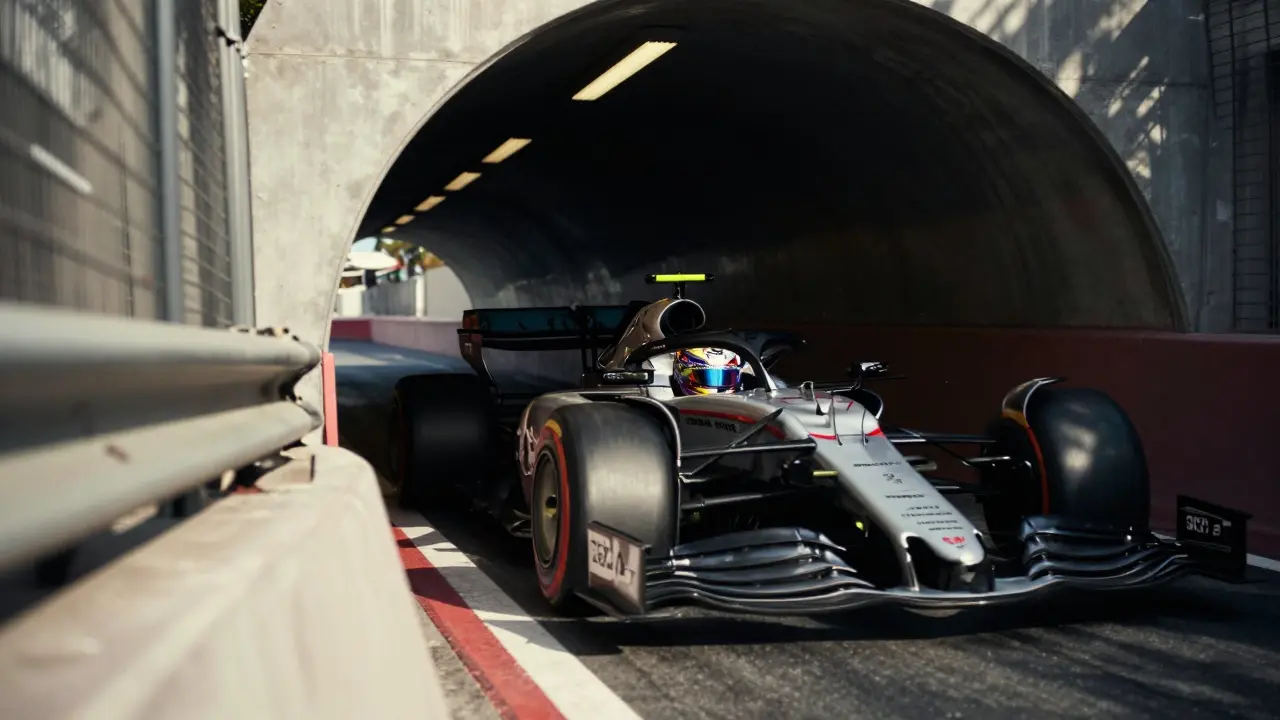
The circuit is built on narrow streets that haven’t changed since 1929. There’s no runoff. No gravel traps. Just concrete, bollards, and the Mediterranean Sea. The famous tunnel? It’s not just a cool feature - it’s a psychological test. Drivers go from bright sunlight into near darkness, then back out again, all while carrying 900 horsepower and 800 kg of downforce. Their eyes adjust in real time, but their hands? They don’t waver.
The Numbers Behind the Speed
Here’s what real speed looks like in Monaco:
- Fastest recorded lap: 1:10.244 by Charles Leclerc in 2024 (average speed: 159.6 km/h)
- Slowest corner: Tabac - taken at under 40 km/h, requiring a full brake application
- Fastest section: Between Sainte Devote and Mirabeau - drivers hit 280 km/h in third gear
- Braking zones: 11 major decelerations per lap, with forces up to 5G
- Steering inputs: Over 100 direction changes per lap - more than any other track
These aren’t just stats. They’re the rhythm of the race. Drivers don’t think about speed in km/h. They think in terms of gear changes, apexes, and the sound of the tires scraping the curb. The car’s speed is a tool - not a goal.
How Drivers Train for Monaco Speed
Most people assume F1 drivers train for top speed. They don’t. They train for control.
- Simulators are programmed with exact curb heights, wall positions, and even the texture of the asphalt - down to the grit on the kerbs.
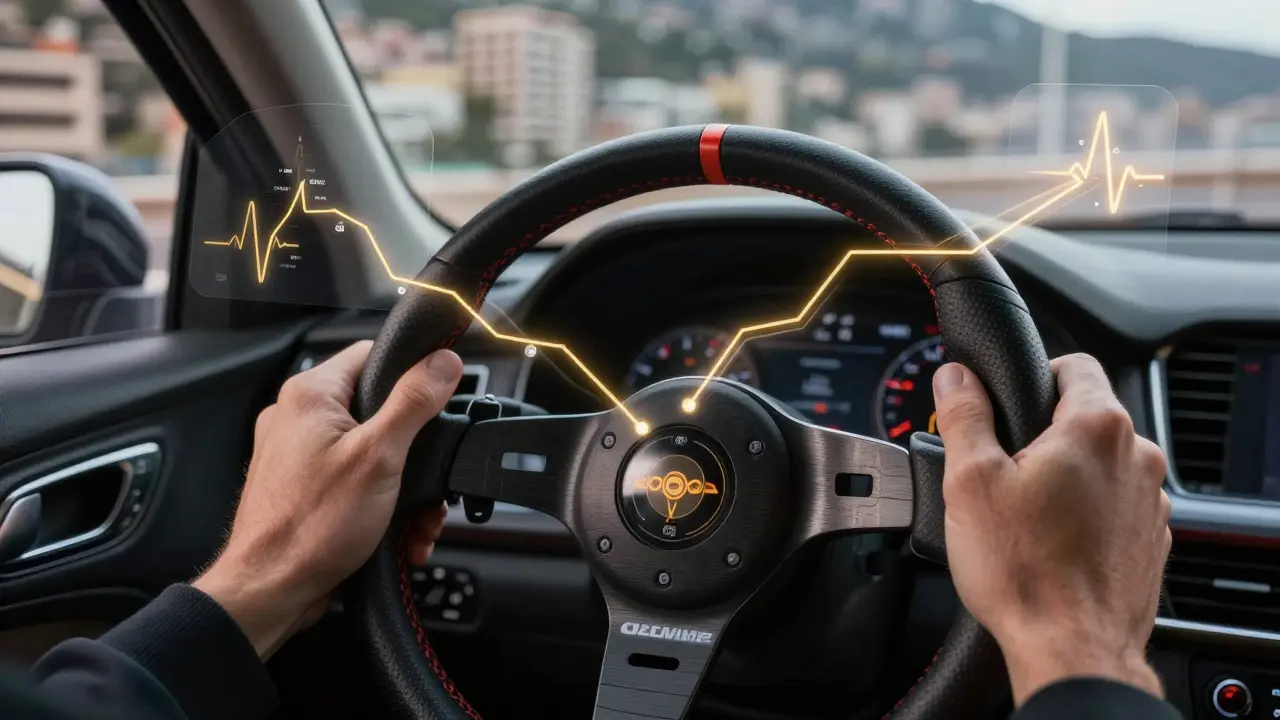
- Drivers practice braking points using heartbeat monitors. They learn to calm their pulse before hitting the brakes at Sainte Devote.
- Many spend weeks riding bicycles along the actual route to memorize every bump, every slope, every shadow.
- Neurological training is now standard. Drivers use VR to simulate the tunnel effect - training their brains to trust their instincts when vision is compromised.
Red Bull’s Max Verstappen said after winning in 2023: "It’s not about going faster. It’s about not going slower. One mistake, and you lose three seconds. And you can’t win that back."
The Car Setup That Makes Speed Possible
Monaco isn’t about power. It’s about grip and balance. Teams spend more time here tuning suspension than at any other race.
- Downforce is set to maximum - even at the cost of straight-line speed.
- Front wing angles are adjusted to within 0.1 degrees to manage airflow through the tight chicanes.
- Brake bias is shifted rearward to help rotation through slow corners like the Swimming Pool section.
- Tire pressures are raised slightly - not to reduce rolling resistance, but to stiffen the sidewalls and improve response over curbs.
- Some teams use carbon fiber inserts in the floor to reduce flex under heavy braking at Rascasse.
Engineers call it "the art of slowing down fast." The car must be so responsive that the driver can make micro-adjustments without overcorrecting. A car too stiff? It’ll skip over bumps and lose grip. Too soft? It’ll wallow through the tunnel and lose time.
Why Speed in Monaco Can’t Be Replicated
No other track in the world combines these elements:
- Public streets with zero margin for error
- Constantly changing grip levels from oil buildup and tire rubber
- Weather that shifts in minutes - rain turns the track into an ice rink
- Historic architecture that reflects heat and alters airflow unpredictably
- Pressure from millions watching - every mistake is live, global, and unforgettable
Even the most advanced simulators can’t fully recreate the tactile feedback of the curb at Turn 10. You have to feel it. You have to know it. That’s why the same driver who wins in Silverstone might crash in Monaco. Speed here isn’t about horsepower. It’s about experience.
The Real Measure of Speed
Speed in Monaco isn’t measured in lap times. It’s measured in consistency. The winner isn’t the fastest driver - it’s the one who makes the fewest mistakes. In 2024, the top three finishers were separated by just 1.8 seconds. The difference between first and fourth? A single misjudged gear change at Rascasse.
That’s why legends like Ayrton Senna won here six times. Not because he was the fastest. But because he was the most precise. He didn’t drive faster than others. He drove cleaner. He didn’t push the limit - he danced around it.
Today’s drivers still talk about Senna’s Monaco laps like they’re scripture. They study the footage frame by frame. Not to copy his lines - but to understand his rhythm.
What Happens When Speed Goes Wrong
In 2023, Oscar Piastri lost control at the swimming pool chicane. He didn’t crash because he was going too fast. He crashed because he was going too slow - and the car didn’t respond as expected. The tires were cold. The grip wasn’t there. The car understeered. And in Monaco, understeer is a death sentence.
That’s the cruel truth: speed here isn’t about how hard you push. It’s about how well you listen. The car talks - through vibrations, through steering feedback, through the sound of the tires. The best drivers don’t fight the car. They negotiate with it.
And when the negotiation fails? The result isn’t just a damaged car. It’s a broken confidence. Many drivers say Monaco is the only race where they feel truly afraid. Not of crashing - but of letting themselves down.
What You’re Really Watching
When you watch the Monaco Grand Prix, you’re not watching a race. You’re watching a conversation - between driver and machine, between instinct and physics, between fear and mastery. The speed you see isn’t the kind you find on a straightaway. It’s the speed of precision. The speed of silence. The speed of a heartbeat held too long.
It’s the only race where the winner isn’t the one who crosses the line first - but the one who made it through without breaking.
Why is the Monaco Grand Prix slower than other F1 races?
The Monaco Grand Prix is slower because it’s a street circuit with tight corners, narrow roads, and no runoff areas. Drivers can’t push to maximum speed like on open tracks. Instead, they focus on maintaining momentum through 19 corners, braking late, and hitting perfect apexes. Average speeds hover around 160 km/h - far below tracks like Monza or Spa - but the difficulty is ten times higher.
Who holds the record for the fastest lap in Monaco?
Charles Leclerc set the fastest official lap in 2024 with a time of 1:10.244 during qualifying. His average speed was 159.6 km/h. This lap remains the benchmark because the track layout hasn’t changed since 1973, and modern cars are still limited by the circuit’s tight geometry and lack of high-speed sections.
How do F1 drivers prepare mentally for Monaco?
Drivers use a mix of visualization, VR simulations, and physical training. Many ride bikes along the actual route to memorize every bump and shadow. They train their eyes to adjust instantly when entering the tunnel. Some even use biofeedback devices to control their heart rate before braking zones. Mental preparation is more critical here than anywhere else - one lapse in focus can end the race.
Why do teams use maximum downforce in Monaco?
Maximum downforce helps the car stick to the track through slow corners and tight chicanes. Even though it reduces top speed on the straights, the gains in cornering stability are worth the trade-off. In Monaco, losing time in a corner can’t be recovered. So teams sacrifice straight-line speed to ensure the car turns predictably and doesn’t slide into the barriers.
Is Monaco the most dangerous F1 race?
Yes - not because of speed, but because of consequences. There’s no runoff, no gravel traps, and walls line every inch of the track. A small mistake means hitting concrete. Since 1950, there have been more accidents in Monaco than any other F1 circuit. Drivers call it the most unforgiving track in the world. Safety has improved, but the risk remains - which is why only the most disciplined drivers win here.